 blog
Is Corporate Catering Delivery for Small Groups Worth It?
Last Updated: October 25, 2026
Quick Summary
Corporate catering delivery for small groups is a scheduled drop-off of prepared food for teams of roughly five to twenty people, with labeled portions and serving ware included. It removes the lunch-run logistics and delivers food when it is meant to be eaten. At Tacos Papi Grande, delivery is free for groups of five or more.
- Order one box per confirmed attendee for individually boxed meals, plus one or two spare boxes.
- For shared platters, plan 1.5 to 2 servings per person across the platters.
- For taco catering, choose two to three proteins plus a vegetarian option, with sides at roughly 1.5 per person.
- Collect dietary needs when you collect the headcount and confirm each portion is labeled.
- Ask for references from other companies and confirm your headcount meets the caterer's minimum order.
Table of Contents
- Why Small Group Office Catering Beats the Usual Lunch Run
- What Corporate Lunch Catering Delivery Actually Looks Like
- Choosing Your Office Lunch Catering Menu Without Overordering
- Catering for Office Meetings: Breakfast, Lunch, and Everything Between
- Delivery or Drop-Off? Matching the Format to Your Group Size
- Dietary Restrictions, Allergens, and Getting the Order Right
- How to Choose a Caterer for a Small Team
- Book Your Next Team Lunch with Tacos Papi Grande
- Frequently Asked Questions
Why Small Group Office Catering Beats the Usual Lunch Run
Here is the math most teams never run.
The other hidden cost is food quality. Food that sits in takeout containers during a drive back to the office steams, wilts, and cools.
Below, we break down how small group office catering actually works, how to order the right amount, and how to pick a caterer you can trust with your team's lunch.
What Corporate Lunch Catering Delivery Actually Looks Like
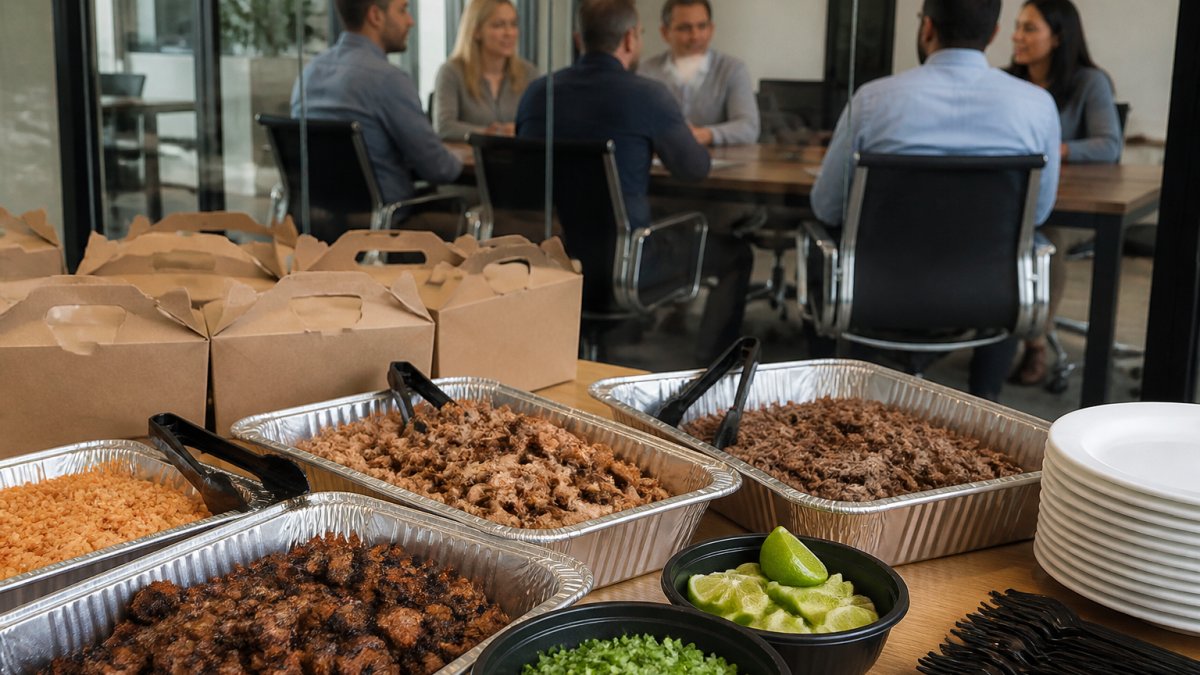
Corporate lunch catering delivery is a scheduled drop-off of prepared food, set up for a specific headcount at a specific time, usually with serving ware and labeled portions included.
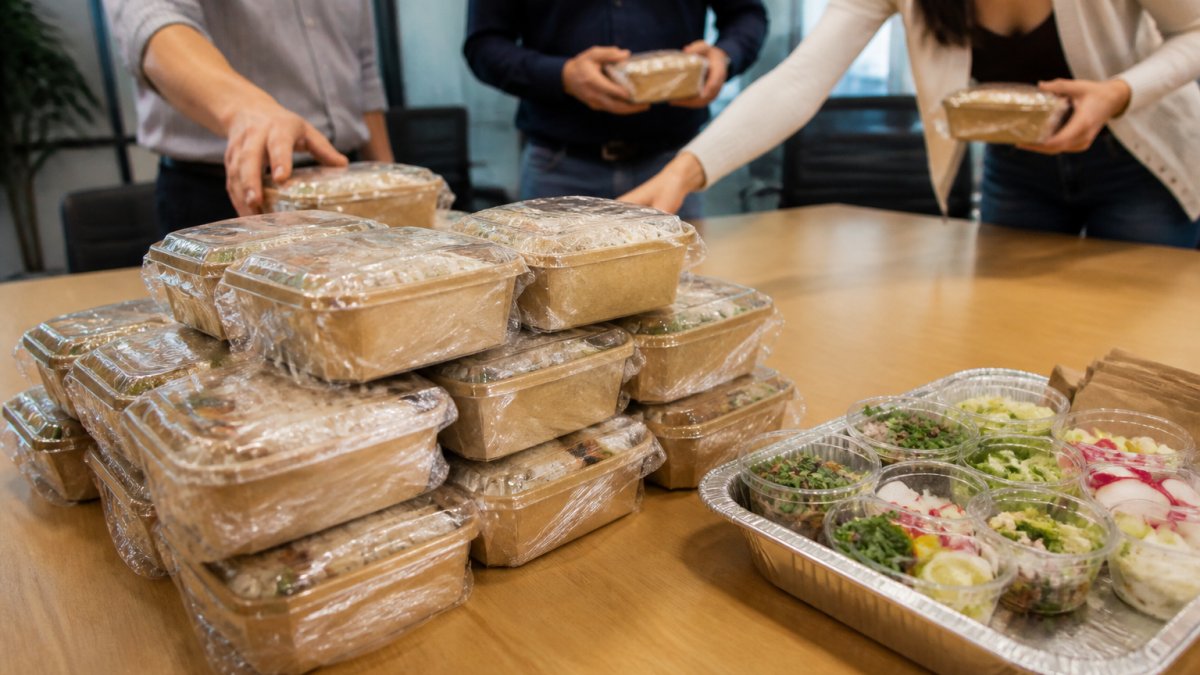
For a group of eight to fifteen, the typical format is individually portioned or pre-wrapped meals so people can grab and go. That matters more than it sounds.
A well-run delivery includes a few things worth checking before you book:
- Labeled portions so dietary needs are not a guessing game
- Serving ware and utensils included, not a separate errand
- A confirmed delivery window, not a vague "sometime around noon"
- Sides and drinks built into the order so you are not making a second run
If you want to see the actual formats and options available to book, you can browse our catering service before you commit to a headcount.
Choosing Your Office Lunch Catering Menu Without Overordering
The most common mistake with an office lunch catering menu is ordering for the appetite people claim to have rather than the appetite they actually have. The fix is to pick an ordering format first, then size portions to your confirmed headcount.
| Format | Best For | How to Size It | Overordering Risk |
|---|---|---|---|
| Individually boxed meals | Working lunches, mixed dietary needs, teams that eat at different times | One box per confirmed attendee, plus 1-2 spare boxes | Low, leftovers keep for later |
| Shared platters | Collaborative teams, casual gatherings, taco and bowl bars | 1.5-2 servings per person across platters | Medium, people take more when serving themselves |
| Family-style trays | Sit-down team meals, celebrations | 1.25-1.5 servings per person, plus extra sides | Medium-high, trays empty faster than expected |
| Direct restaurant delivery | Very small teams (5-8) who want variety | Order a la carte to headcount | Low, but delivery fees and minimums apply |
For taco-style catering specifically, the practical rule most teams land on is two to three protein choices plus a vegetarian option, with tortillas and sides sized at roughly 1.5 per person. That covers build-your-own preferences without turning the order into a spreadsheet. If your group skews toward lighter eaters or the meeting runs through a heavy snack table, drop to 1.25 servings per person on sides.
A simple per-person planning worksheet keeps the order honest:
- Confirmed headcount: the number of people who RSVP'd, not the number invited
- Main portions: 1 per person for boxed meals; 1.5 per person for shared formats
- Dietary covers: count vegetarian, vegan, and gluten-free needs separately so those portions are guaranteed
- Buffer: 1-2 extra meals for known big eaters or last-minute attendees, never a full extra tray
Watch out for the two classic overordering traps. The first is ordering to the invited count when half the team is remote that day. The second is adding a buffer to every line item instead of one buffer for the whole order. Order to your confirmed headcount, add a small buffer only for known big eaters, and let the first delivery teach you the real number.
To plan quantities against actual menu items, you can view the lunch and dinner menu and match portions to your group.
Catering for Office Meetings: Breakfast, Lunch, and Everything Between
Catering for office meetings splits into three practical windows, and each has a different logic. Morning meetings reward light, easy-to-handle food that does not slow people down. Midday meetings need portions that hold up if the agenda runs long. Afternoon sessions benefit from something shareable that keeps energy up without a full meal.
Breakfast catering for a small team usually means items people can eat one-handed while reviewing an agenda. Lunch catering is the workhorse: a full portion per person, delivered on time, with dietary options clearly separated.
The throughline here is timing. A meeting caterer who arrives twenty minutes late is worse than a plain sandwich, because the whole room is now waiting on food instead of starting.
Delivery or Drop-Off? Matching the Format to Your Group Size
Group size should decide your format, not the other way around. Here is how the options break down in practice:
| Group Size | Best Format | What to Expect | Watch For |
|---|---|---|---|
| 5-15 people | Individually portioned delivery | Pre-wrapped meals, labeled dietary options, included serving ware | Confirm the delivery window, not just the date |
| 15-30 people | Family-style trays with serving setup | Shareable trays, sides, utensils and plates provided | Order a small buffer; trays empty faster than expected |
| 30-50 people | Buffet or staffed setup | On-site serving support, replenished trays | Needs space and a serving plan |
| 50+ guests | Full on-site cooking | Equipment, cooks, and presentation on location | Book well ahead and confirm the setup plan |
The delivery-versus-drop-off distinction matters most at the edges. For small groups, a straightforward delivery with labeled portions is usually all you need. For larger company events, full on-site cooking means the food is prepared where it is served, which keeps quality high and presentation sharp. If you are planning something at the larger end, ask your caterer directly whether they cook on site or simply drop off, and get the answer in writing.
Dietary Restrictions, Allergens, and Getting the Order Right
Allergen handling is the part of catering where a small mistake becomes a serious problem, so treat it as a process rather than a preference.
Start by separating requests into three buckets, because they carry different levels of risk:
- Medical needs: food allergies (peanuts, tree nuts, shellfish, eggs, dairy, soy, wheat) and celiac disease. These require real kitchen controls, not just ingredient swaps.
- Dietary choices: vegetarian, vegan, halal, kosher-style, and gluten-free-by-preference. These need accurate labeling but not the same separation controls.
- Taste preferences: no cilantro, no onions, sauce on the side. These are nice to honor but should never be mixed into the allergen count.
A common mistake is assuming "no cilantro" and "gluten-free" are the same kind of request. One is a taste preference, the other can be a medical need.
For each dietary category, here is what to confirm with the caterer before you book:
| Dietary Need | What to Ask | What Good Looks Like on Delivery |
|---|---|---|
| Vegetarian | Are beans, rice, and veggie fillings prepared separately from meat? | Labeled vegetarian portions, separate serving utensils |
| Vegan | Are dairy and eggs absent from the full dish, not just the topping? | Labeled vegan meals with no shared cheese or crema |
| Gluten-free | Are tortillas, chips, and sauces certified or prepared in a gluten-free area? | Sealed gluten-free tortillas and labeled containers |
| Food allergy | How are allergen-free items prepared and kept separate? | Individually packaged allergen-free meals, labeled by name |
Ask three questions before you book:
- How are allergen-free items prepared and kept separate from the main line?
- Will each portion be labeled with the dietary need it meets and the name of the person it is for?
- Who do I contact on delivery day if something is wrong, and what is the fix window?
For a small group, the simplest reliable system is individually portioned and labeled meals for anyone with a medical need, with shared platters for everyone else. That keeps the allergen count small and the labeling unambiguous. Collect dietary needs at the same time as the headcount, submit them with the order, and confirm the labels when the food arrives, before the room starts serving itself.
For answers on allergens, dietary accommodations, and ordering details before you commit, our frequently asked questions cover the specifics.
How to Choose a Caterer for a Small Team
Picking a caterer for a small team comes down to four checks: reliability, food quality, dietary handling, and whether the minimum order fits your group. Small groups get ignored by some caterers because the order is small, so confirm upfront that your headcount qualifies for delivery at all.
Reliability is the one you cannot skip. Ask for references from other companies in your area and actually call one.
Then check the minimum order and delivery terms. Some caterers set minimums that quietly exclude small teams.
If you want to ask about your specific headcount or request a quote before booking, you can contact us and we will walk you through it.
Book Your Next Team Lunch with Tacos Papi Grande
The case for corporate catering delivery for small groups is straightforward: less time lost to lunch logistics, better food, and one less thing on the office manager's plate.
That is where we come in. Tacos Papi Grande is a 501(c)(3) nonprofit, which means every meal you order does double duty.
So here is the challenge: next week's team lunch is already on the calendar, and someone is about to volunteer for the lunch run. Take that job off their hands. Order online and get authentic, scratch-made tacos delivered to your office, with a portion of proceeds going back into the community to help single parents in need.
Get started with Tacos Papi Grande and turn your next team lunch into the easiest one on the calendar.
Frequently Asked Questions
How much food should I order for a small office group?
Plan on two to three tacos per person for a lunch, plus sides and a drink if you are offering them. For a group of 10, that means roughly 20 to 30 tacos, which leaves room for bigger appetites without piling up leftovers. If your meeting runs through the afternoon or the group skews toward hearty eaters, lean toward the higher end. Ask your caterer about per-person portions and whether they offer a set package for your headcount, since that removes most of the guesswork.
How far in advance should I order corporate catering delivery?
A safe rule is 48 to 72 hours for small group corporate catering, and a week or more for larger company events or anything during a busy season like the winter holidays. Scratch-made food takes time to prepare, and popular delivery windows around noon fill up first. If your order includes specific dietary requests or a customized menu, add a couple of days. Confirm the delivery time and drop-off point when you book so no one is standing in a lobby waiting.
Is delivery or on-site catering better for a small corporate event?
For a small team lunch, delivery is usually the better fit. Food arrives portioned and ready to serve, and your group eats within minutes of setup. On-site cooking makes more sense once you are feeding 50 or more guests, where a live setup adds energy and keeps food fresh across a long service window. For anything in between, ask the caterer which format they recommend for your headcount, venue, and schedule.
How do I accommodate dietary restrictions when ordering office catering?
Collect restrictions from your team before you order, not after. Ask about vegetarian and gluten-free needs, cilantro or onion preferences, and any allergies, then pass the list to the caterer in writing. Good caterers label individual portions and keep allergens separate during packing. Build your office lunch catering menu around customizable items like tacos, where fillings and toppings are chosen per person, so one order can cover a range of needs without extra cost.