 blog
Is Professional Taco Catering Worth It? A Cost & Convenience Guide
Table of Contents
- What Professional Taco Catering Actually Includes
- DIY Taco Bar vs Catering: Breaking Down Time, Effort, and Hidden Costs
- Understanding Taco Catering Cost Per Person
- Professional Taco Catering for Large Groups: When Scale Changes Everything
- Key Questions to Ask a Taco Caterer Before You Book
- When Professional Catering Delivers Real Value
- Frequently Asked Questions
Last Updated: October 18, 2026
What Professional Taco Catering Actually Includes
Professional taco catering isn't just someone showing up with a tray of food. When you book professional taco catering, you're paying for a complete service that handles everything from menu planning to cleanup.
Professional catering includes customized menu selection, portion planning based on guest count, on-site food preparation or delivery with proper food safety handling, and service coordination.
Service level varies by event size. Small groups of five to ten typically receive delivery with minimal setup; groups of 50 or more often get full on-site cooking with professional presentation and staffing.
DIY Taco Bar vs Catering: Breaking Down Time, Effort, and Hidden Costs
The DIY-versus-catering debate usually gets settled with a single comparison: the grocery bill versus the caterer's quote. That comparison is incomplete, because the grocery bill leaves out equipment, waste, labor, and the cost of the host's attention. Build an itemized DIY cost stack and find the guest count where the two options cross over.
The full DIY cost stack
A DIY taco bar for a crowd involves more line items than most hosts plan for:
| DIY cost category | What to account for |
|---|---|
| Ingredients | Proteins, tortillas, toppings, sides, salsas, seasonings, ice, beverages |
| Equipment | Chafing dishes, warming trays, fuel, serving utensils, platters, linens, tables |
| Consumables | Plates, napkins, cutlery, cups, trash bags, foil pans |
| Labor | Shopping, prep, cooking, setup, serving, restocking, cleanup |
| Waste | Overbuying to avoid running out, plus spoilage and leftovers |
| Logistics | Delivery or pickup trips, rentals, returns |
| Risk | Food safety exposure and the value of the host's time |
Two categories are routinely underestimated. Equipment: warming trays, chafing dishes, and serving pieces are rented or purchased, and both carry cost. Waste: hosts overbuy to avoid running out, and perishable taco ingredients don't keep well, so much of the grocery spend ends up in the trash.
The time cost is real labor
The hours a DIY taco bar consumes are hours someone is not hosting. For a crowd of 30, that includes shopping, protein preparation (scratch-made birria or al pastor can take hours of braising or marinating), station setup, monitoring and restocking, and cleanup. For a business event, those hours represent payroll spent on logistics instead of the event itself.
Finding the break-even by guest count
Find where the two cross over for your event:
- Small, informal gatherings. At low guest counts, the DIY ingredient bill is modest, equipment needs are minimal, and the host's time is easy to absorb. DIY often wins on pure dollars, provided the host is comfortable with prep and food safety basics.
- Mid-size events. As the count climbs, DIY equipment, waste, and labor hours scale up. The gap between DIY's true all-in cost and a professional drop-off quote narrows, and for hosts with limited time, the professional option often becomes competitive.
- Large or high-stakes events. At larger counts, DIY requires commercial-scale equipment, safe hot-holding, and hours of labor few hosts can spare. Professional catering, especially staffed or live-cooking service, typically becomes the better value once waste, equipment, and labor are priced honestly.
To run the comparison, total the DIY stack above, add a dollar value to the host hours, and compare that all-in figure to an itemized professional quote at the same guest count and service level.
What DIY cannot replicate
Some advantages of professional catering don't show up in a cost table. Professional caterers carry food safety certifications and liability insurance, which matters when the event is tied to an organization. They manage hot-holding temperatures, prevent cross-contamination, handle dietary accommodations, and bring the equipment and staffing to keep a line moving. The value is not only the food, it is the removal of operational risk and the freedom to be present.
A practical decision rule
If your guest count is small, the event is casual, and you're comfortable managing food safety, DIY can be reasonable. If the count is larger, the event is tied to a business or milestone, or your time is better spent hosting, professional catering usually delivers more value once the full DIY cost stack is on the table.
Understanding Taco Catering Cost Per Person
Per-person pricing is the number most hosts fixate on, and it's also the number most likely to mislead. A quoted "$X per person" can mean wildly different things depending on service level, what's included, and what's billed separately. To compare caterers fairly, you need the full cost stack.
The four cost layers behind every per-person quote
Most professional taco catering quotes are built from four layers. Ask which layers are included before you compare two bids.
| Cost layer | What it typically covers | Usually included in a drop-off quote? | Usually included in a staffed quote? |
|---|---|---|---|
| Food and ingredients | Proteins, tortillas, toppings, sides, salsas, serving utensils | Yes | Yes |
| Equipment and logistics | Chafing dishes, warming trays, linens, delivery, setup, pickup | Sometimes | Yes |
| Labor | Servers, on-site cooks, station attendants, cleanup crew | No | Yes |
| Fees and add-ons | Sales tax, gratuity, delivery distance fees, overtime, disposal | Varies | Varies |
A drop-off taco bar and a staffed on-site cooking setup can quote similar per-person rates while delivering very different amounts of food, labor, and equipment. Request an itemized quote.
Service levels change what "per person" means
There are three common service levels in taco catering, and each one prices differently:
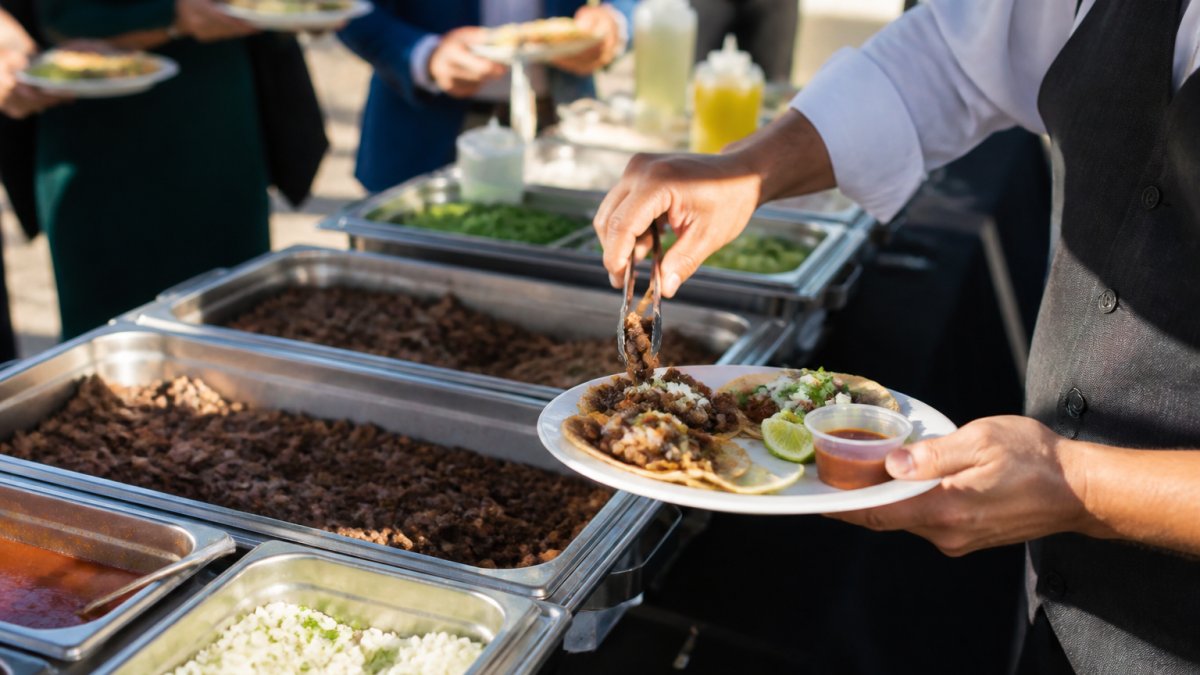
- Drop-off taco bar. The caterer delivers proteins, tortillas, toppings, and sides with warming equipment, sets up a self-serve station, and picks up afterward. This is the lowest-cost professional option and typically includes food, basic equipment, and delivery but not staff.
- Staffed buffet. The caterer delivers and sets up, then provides servers to keep the line moving, restock, monitor food temperature, and handle cleanup. Labor is the main cost driver, and a common pattern is roughly one server per 25 to 40 guests depending on menu complexity and event length.
- Live on-site cooking. The caterer brings a cooking setup and prepares tacos to order on location. This delivers the freshest product and strongest guest experience, but requires venue access, space, and often power or fuel, and carries the highest per-person cost because of equipment and skilled labor.
Compare like service levels. A drop-off quote against a live-cooking quote is not apples-to-apples, and the lower number doesn't necessarily represent better value.
What actually moves the per-person number
Several variables shift the rate up or down:
- Protein selection. Basic options like ground beef or chicken usually sit at the low end. Premium proteins such as birria, al pastor, or asada typically add to the per-person rate because of ingredient cost and longer preparation time.
- Guest count. Fixed costs, delivery, setup, equipment, and minimum staffing, spread across more guests as the count rises. Events of 10 to 20 people often carry a higher effective per-person rate.
- Menu breadth. Adding sides, appetizers, desserts, or a beverage station increases the per-person rate. A focused taco menu with one or two proteins and standard toppings is the most economical configuration.
- Service duration. Staffed service is usually priced for a set window, often two to three hours. Longer events may incur overtime, so confirm the service window in writing.
- Delivery distance and site access. Longer drives, stairs, limited parking, or venues without easy load-in can add delivery or setup fees.
- Tax and gratuity. Sales tax applies to catering in most states, and gratuity for staffed service is commonly added on top of the food and labor subtotal. Ask for both explicitly.
A transparent way to compare two quotes
Rather than comparing the per-person headline, build an all-in total for each bid:
- Food and beverage subtotal
- Equipment and delivery charges
- Labor and staffing charges
- Service window and any overtime terms
- Sales tax
- Gratuity
- Cleanup and disposal fees
Divide the all-in total by your confirmed guest count to get a true per-person figure. Two caterers quoting the same headline rate can land hundreds of dollars apart once fees, tax, and gratuity are included.
Why the lowest per-person rate is not automatically the best value
A lower rate can reflect smaller portions, fewer proteins, lower-grade ingredients, or a thinner service package. The better question is what each dollar buys: how many protein options, whether tortillas are made fresh, whether staff manage the line, and whether cleanup is included.
Professional Taco Catering for Large Groups: When Scale Changes Everything
Large group events of 50 people or more transform the catering equation entirely. At this scale, professional taco catering shifts from a convenience to a necessity.
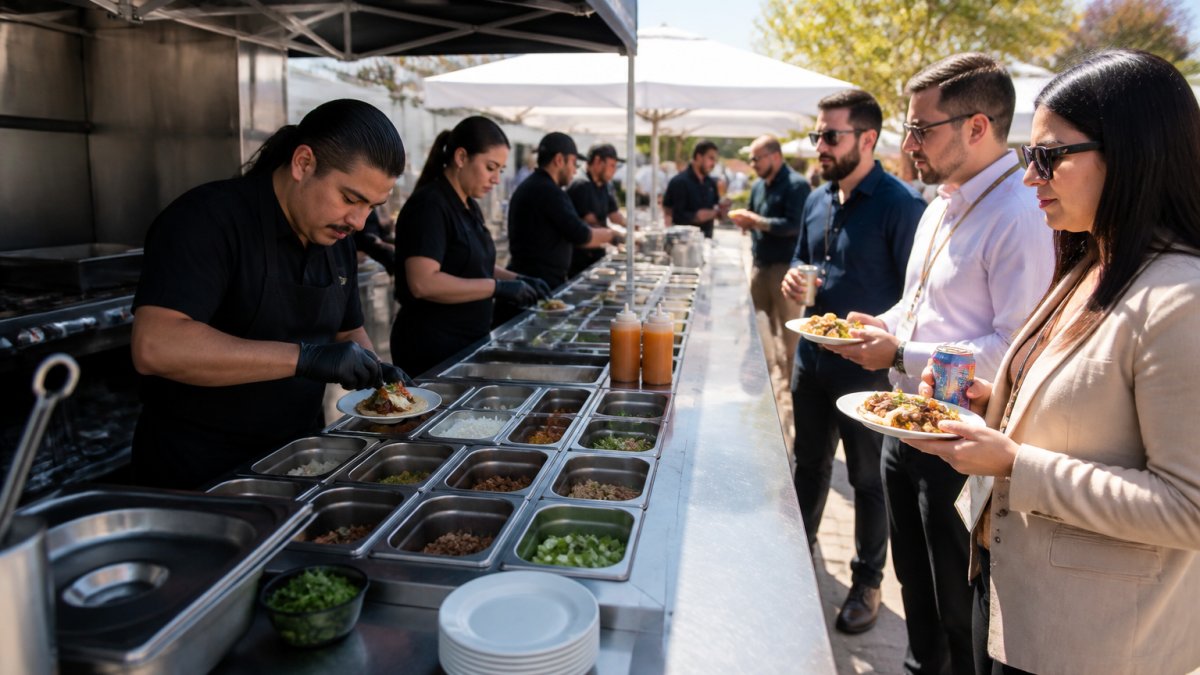
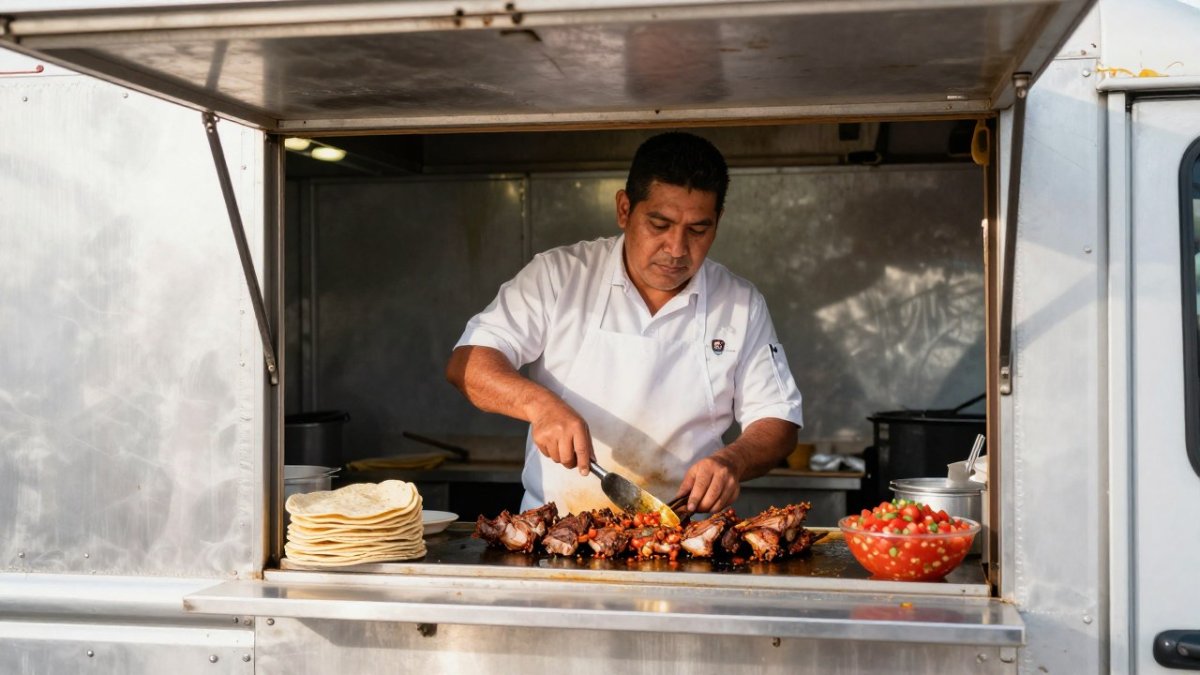
For large events, professional caterers provide on-site cooking. They arrive with equipment, cook fresh tacos on-location, and manage the entire service operation.
The operational advantages matter more at scale.
For corporate events or private parties with 50-plus guests, professional taco catering delivers better results with less organizational stress.
Key Questions to Ask a Taco Caterer Before You Book
Before committing to a professional taco caterer, ask specific questions that reveal their service quality and reliability, and help you avoid surprises on event day.
References and past events: Can you speak with other organizations who've used their service?
Delivery and setup logistics: What does delivery include? Do they set up serving stations? How long do they stay?
Menu customization: Can they accommodate specific protein preferences? Do they offer sides beyond standard taco toppings?
Pricing transparency: Request an itemized quote showing protein cost, sides, delivery, setup, and any service fees.
Contingency planning: What happens if they encounter equipment issues or staffing problems? Do they have backup plans?
When Professional Catering Delivers Real Value
Professional taco catering makes sense in specific situations where the value clearly outweighs the cost.
Corporate team events: For a company lunch or team-building event, professional catering keeps your focus on the event rather than food logistics.
Private celebrations where you want to enjoy your guests: Birthdays, anniversaries, and family gatherings are meant for connection.
Large corporate or community events: At 50-plus people, professional catering becomes nearly mandatory.
The real value of professional taco catering isn't just convenience, it's peace of mind.
Choosing between DIY and professional taco catering comes down to your priorities: cost, time, quality, and peace of mind. At Tacos Papi Grande, we specialize in scratch-made birria, al pastor, and asada tacos designed to impress your guests while supporting our community mission. For events of 50-plus people, we provide full on-site cooking and professional service. Learn more about food safety standards for catering to understand what professional caterers manage for you.
Frequently Asked Questions
Is professional taco catering worth it for a small office lunch?
For groups of 5-15 people, professional taco catering becomes worth it when you factor in your time, shopping trips, prep work, and cleanup. Many caterers offer free delivery for groups of five or more, eliminating that cost barrier. If your team has dietary restrictions or allergies, a professional caterer handles customization reliably, reducing your stress. For small groups, the convenience often outweighs a modest per-person premium over DIY.
How much does taco catering cost per person compared to making your own?
Pricing depends on quantity, dates, delivery distance, and menu selections. Professional taco catering cost per person typically reflects scratch-made ingredients, labor, equipment, and service. For an accurate quote tailored to your guest count and event details, contact your caterer directly. DIY taco bars have lower per-person food costs but add hidden expenses: your time, shopping, prep, serving supplies, and cleanup effort.
What questions should I ask a taco caterer before booking?
Ask about delivery fees and minimums, how they handle dietary restrictions and allergies, portion sizes and meat options, setup and cleanup responsibilities, advance booking requirements, and references from similar events. For groups over 50, confirm whether they provide on-site cooking or drop-off service, what equipment they bring, and how long they stay. Request an itemized quote so you understand exactly what you're paying for and can compare service levels fairly.
Is professional taco catering better for large groups than DIY?
For taco catering for large groups (50+ guests), professional service becomes essential. DIY scaling becomes logistically impossible: you'd need commercial kitchen space, serving equipment, staffing, and food safety compliance. Professional caterers handle on-site cooking, temperature control, and presentation at scale. They manage dietary needs across many guests, coordinate timing, and handle cleanup. For events over 50 people, professional catering isn't just convenient, it's often the only practical option.