 How-to
How to Identify Authentic Scratch-Made Birria
Table of Contents
- What Makes Birria Authentic
- Authentic Birria Ingredients You Should Recognize
- Traditional Birria Preparation Methods
- Understanding Birria Consommé
- Your Birria Catering Questions Answered
- Sensory Clues: Taste, Texture, and Appearance
- Birria Tacos Versus Birria Stew: What's the Difference
- Frequently Asked Questions
Last Updated: October 17, 2026
What Makes Birria Authentic
Authentic scratch made birria is a slow-cooked meat stew with deep roots in Jalisco, western Mexico. At Tacos Papi Grande, we focus on what separates true scratch-made birria from shortcuts and premade versions.
Authentic scratch made birria starts with intentional choices: specific meat cuts, dried chiles blended fresh, and hours of low-and-slow cooking. It's not just about the final taste. It's about understanding the process behind it.
Regional variations matter. Families in Jalisco prepare birria differently than those in Nayarit or Zacatecas, using goat, lamb, or beef, and the chile base shifts too.
Birria's Jalisco roots and regional variations
Birria originated in Jalisco as a way to use tougher meat cuts. Slow braising transformed them into tender, flavorful dishes.
In Jalisco, goat remains traditional, leaner and deeply seasoned. Travel east and you'll find lamb-based birria; among different families, beef appears.
The chile base shifts too: some cooks favor guajillo for a mild, fruity base, others blend guajillo with ancho for depth, and a few add chipotle for smoke.
This is why asking your caterer about their process matters. A scratch-made birria reflects choices. Premade versions flatten those choices into standardization.
Why scratch-made matters
Scratch-made birria takes time. A proper braise runs 4-6 hours minimum, allowing the meat to break down completely, the spices to meld, and the consommé to develop body and depth.
When a caterer cuts corners, premade chile sauce replaces hand-blended dried chiles and canned broth replaces the flavor-building cooking liquid. The result tastes like birria, but not like authentic scratch-made birria.
The difference shows up in texture and flavor layering: rushed birria shreds unevenly and its consommé tastes thin, while authentic birria shreds cleanly and the consommé coats your mouth.
Authentic Birria Ingredients You Should Recognize
When you're evaluating a birria caterer, ask about specific ingredients. The answers tell you whether they're building from scratch or assembling from premade components.
Meat selection: goat, lamb, and beef
The meat choice is your first clue. Goat is traditional in Jalisco, lean, takes seasoning well, and produces a consommé with natural body.
None of these is a red flag on its own. What matters is whether the caterer chose it intentionally and knows how to cook it.
The meat should be cut into large chunks before cooking, 2 to 3 pounds per piece. Small chunks cook too fast and dry out. Large chunks braise evenly and stay juicy inside.
After cooking, the meat should shred by hand with minimal effort.
The chile base: guajillo, ancho, and dried chiles
Dried chiles are the backbone of authentic birria flavor. Guajillo chiles are mild and fruity. Ancho chiles are deeper and slightly sweet.
Some cooks add a single chipotle for smoke. Others include a dried chile de árbol for heat. The specific blend is a family or regional choice.
What matters is that these are whole dried chiles, toasted, rehydrated, and blended into a smooth paste. You should taste individual chile flavors layering on each other.
Ask your caterer: "Do you blend whole dried chiles or use chile powder?" The answer separates scratch-made from shortcuts.
Spices, vinegar, and depth builders
Beyond chiles, authentic birria relies on a specific spice blend. Cloves, cinnamon, cumin, and oregano are standard; some cooks add bay leaf or thyme.
Vinegar adds brightness and helps tenderize the meat. White vinegar or apple cider vinegar both work.
Pineapple or tomato paste adds depth and subtle sweetness that balances the chiles and spices.
White onion and garlic are aromatics that build the foundation. They should be fresh, not powdered.
When you taste authentic birria, you should detect layers: chiles first, then spices, then sweetness, then brightness from vinegar.
Traditional Birria Preparation Methods
The cooking method defines authentic birria. It's not fast. It's not complicated. It's deliberate.
Low-and-slow braising and cooking times
Authentic birria braises at a low temperature for 4-6 hours minimum, some cooks go 8, to render the meat's connective tissue and let the flavors meld completely.
Low-and-slow means 275-300°F in the oven or a gentle stovetop simmer. High heat dries out the meat and prevents the consommé from developing properly.
The meat should stay completely submerged in braising liquid, a mix of chile-spice paste, stock (chicken, beef, or vegetable), vinegar, and aromatics.
The braise is done when the meat shreds easily by hand and the consommé has body, coating a spoon.
Shredding and texture indicators
After cooking, the meat is removed and shredded, this should take minimal effort. If you're fighting the meat to shred it, something went wrong in the braise.
Properly braised meat shreds into long, clean strands, moist but not falling apart. When you pick up a strand, it should hold its shape.
The shreds should be roughly the same size. Inconsistent sizing suggests uneven cutting before cooking or an uneven braise.
After shredding, the meat goes back into the consommé to absorb more flavor. This is where birria gets its distinctive juiciness.
Understanding Birria Consommé
The consommé is what makes birria special. It's not a side. It's the heart of the dish.
What authentic consommé tastes and looks like
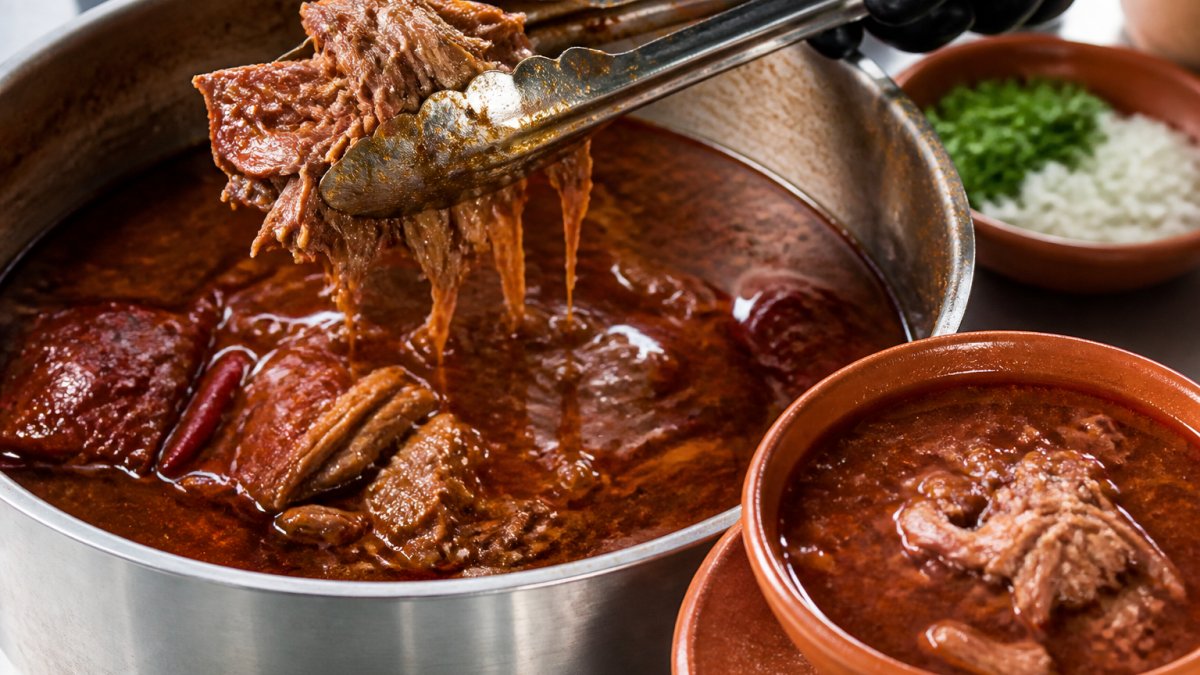
Authentic consommé should be rich, glossy, and deeply colored. A deep red or dark brown is typical. The color comes from the dried chiles and long cooking time.
When you taste it, you should feel the weight of it on your tongue. It should coat your mouth.
The flavor should be complex. You taste the chiles, the spices, the meat, and the aromatics all at once. No single element dominates.
The consommé should be warm but not boiling when served. Boiling breaks down the fat and makes it look thin and greasy.
Spotting shortcuts and premade sauce
Premade consommé looks thin. It's watery. It doesn't coat your mouth. You can taste it's missing the depth that comes from hours of cooking.
Some caterers use canned broth as a base and add chile sauce on top. The result tastes like seasoned broth, not birria consommé. The layers are missing.
Others use premade chile sauce from a jar or can. This sauce is shelf-stable, which means it's been processed heavily.
Ask your caterer: "Do you make your consommé from scratch during the braise, or do you add sauce after?" The answer matters.
Your Birria Catering Questions Answered
When you're booking a birria caterer, ask specific questions. The answers reveal whether you're getting authentic scratch-made birria or something else.
What to ask your caterer about sourcing and process
Start with the basics:
- What meat do you use, and why?
- Do you blend whole dried chiles or use chile powder?
- How long does your birria braise?
- Do you make your consommé from scratch during cooking?
- Can you describe your spice blend?
- Do you have references from other events or companies?
Listen for specificity. A caterer who can describe their process in detail is thinking through their work. A caterer who gives vague answers is cutting corners.
Ask about flexibility too. Can they handle dietary restrictions? Do they offer vegetarian options? Can they adjust spice levels? Scratch-made means they have control. Premade means they don't.
For groups of five or more, Tacos Papi Grande offers free delivery. For larger events with 50+ guests, we provide full on-site cooking. Ask your caterer what their options are and whether they can accommodate your group size and timeline.
Red flags and reliability signals
Red flags include:
- Caterer can't describe their chile blend
- They use only canned or powdered ingredients
- Their consommé looks thin or watery
- They can't provide references
- They rush the cooking process
- They won't discuss their sourcing
Reliability signals include:
- They ask detailed questions about your event
- They can describe their process in specific terms
- They have references from similar events
- They're willing to adjust recipes for dietary needs
- They arrive early to set up properly
- They have backup equipment in case something fails
At Tacos Papi Grande, we're a 501(c)(3) nonprofit. That means a portion of every meal supports single parents in our community. We take our process seriously because our mission depends on it. We can provide references from events across the Austin and San Antonio areas, and we're transparent about how we source and prepare every dish.
Sensory Clues: Taste, Texture, and Appearance
Your senses tell you a lot about birria quality. Learn what to look and taste for.
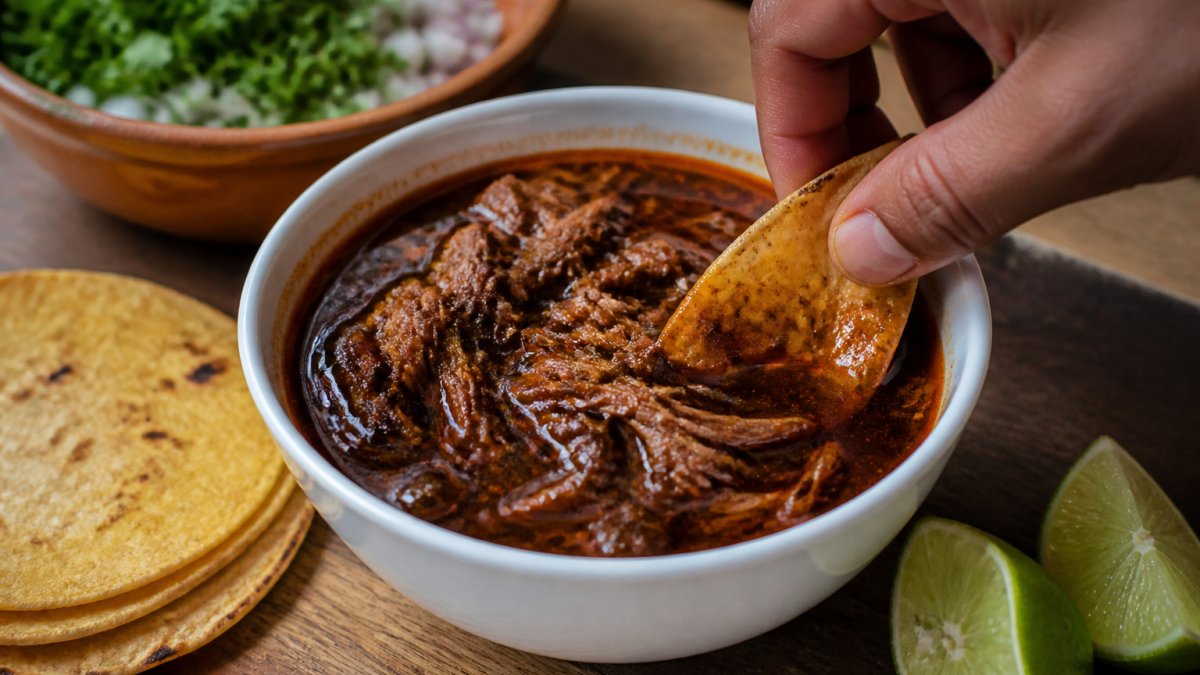
Flavor depth and layering
When you taste authentic birria, you should taste multiple flavors unfolding. First comes the chile flavor, fruity, slightly smoky, not harsh.
If you taste only one or two flavors, it's not layered properly. This usually means premade sauce or rushed cooking.
The flavor should build as you eat. The first bite tastes different from the fifth bite. This is the consommé working on your palate, deepening the experience.
Authentic birria should not be one-note. It should not taste like just "spicy" or just "meaty." It should taste like a story, each ingredient playing a role.
Meat juiciness and structural integrity
The meat should be visibly moist. When you pick up a strand, it should glisten. This glisten comes from the consommé it's been soaking in.
When you bite into it, it should be tender enough to chew easily but structured enough to hold together. It should not fall apart immediately.
If the meat is dry, it didn't braise long enough or it's been sitting out too long.
The texture should be consistent across all the meat. Inconsistent texture suggests uneven cooking or mixing meat from different batches.
Birria Tacos Versus Birria Stew: What's the Difference
These are two ways to serve the same dish. Understanding the difference helps you order what you want.
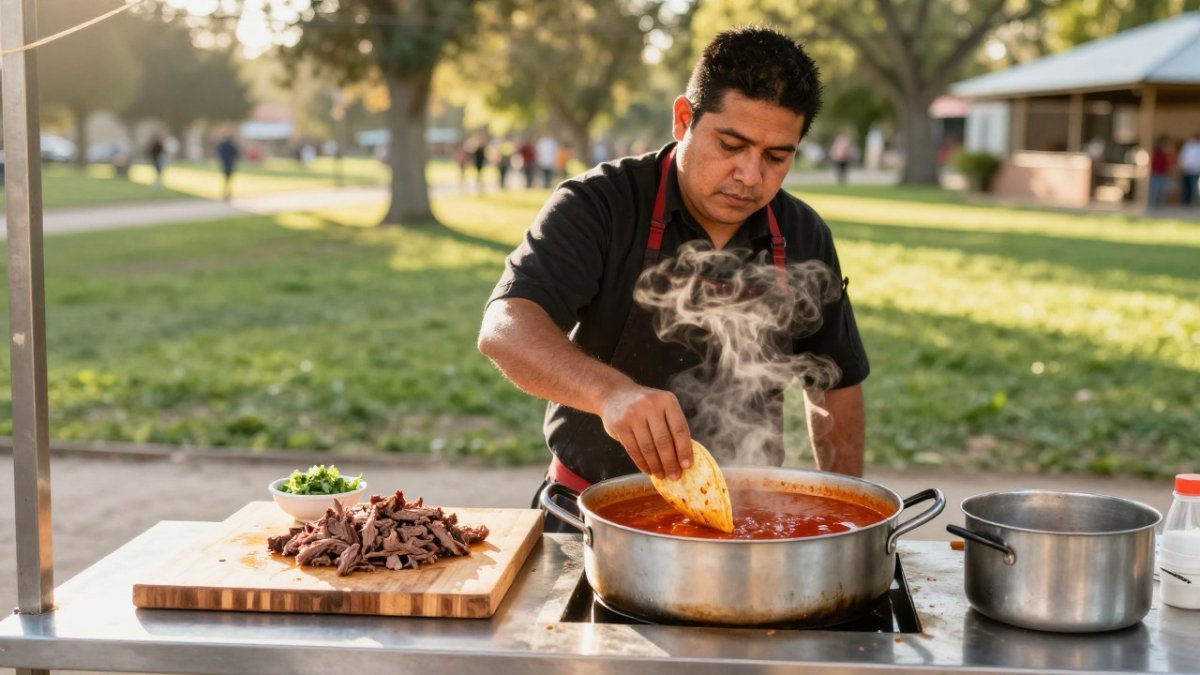
Birria tacos (also called red tacos) are corn tortillas dipped or lightly fried in the consommé, filled with shredded birria meat, and served with toppings like white onion, cilantro, and lime.
Tacos are portable and shareable. Stew is more immersive and lets you taste the consommé more directly.
Both should use the same authentic scratch-made birria underneath. The difference is presentation, not quality.
When you're choosing a birria caterer, you're choosing someone who understands this dish.
At Tacos Papi Grande, we use whole dried chiles, intentional spice blends, and meat we choose for each batch.
Frequently Asked Questions
How can you tell if birria is made from scratch?
Authentic scratch-made birria shows clear signs: the consommé has visible depth and richness with layers of chile, spice, and meat flavor; the shredded meat falls apart easily and tastes juicy rather than dry; and the overall dish has complexity that shortcuts cannot replicate. Ask your caterer about cooking time, whether they use whole dried chiles or premade sauce, and if they source their own meat. Premade versions taste flat and one-dimensional by comparison.
What ingredients are used in traditional birria?
Traditional birria uses guajillo, ancho, and other dried chiles as the flavor foundation, combined with spices like cloves, cinnamon, cumin, and oregano. The meat is typically goat, lamb, or beef, braised with white onion, garlic, vinegar, and sometimes pineapple or wine. The cooking liquid becomes the consommé. Quality birria avoids shortcuts like premade chile paste or canned sauces; instead, dried chiles are toasted, soaked, and blended fresh. Regional variations exist, but the core is always slow-cooked meat in a deeply seasoned chile broth.
What should authentic birria consommé taste like?
Authentic consommé should taste rich, complex, and slightly spicy with noticeable depth from the chiles and spices. You'll detect layers: the initial heat from dried chiles, the warmth of cloves and cinnamon, the savory meat undertone, and a subtle sweetness from pineapple or wine if used. The broth should coat your mouth and linger. Premade or shortcut versions taste thin, one-note, or overly salty. Real consommé has body and color from hours of braising; it's never watery or artificially colored.
What questions should you ask a caterer about their birria?
Ask how long they cook the meat, whether they use whole dried chiles or premade sauce, what type of meat they use, and if they can accommodate dietary restrictions like no cilantro or gluten-free tortillas. Request references from other groups they've catered for, and ask if they cook on-site for larger events so you can see the quality firsthand. For groups of five or more, confirm delivery details and timing. These questions reveal whether they prioritize authenticity and reliability.