 How-to
7 Steps to Meet On-Site Taco Cooking Requirements
Last Updated: October 31, 2026
Quick Summary
On site taco cooking means bringing a full kitchen to the event, cooking and serving tacos where guests are, which requires health department food service permits, business registration, and written venue approval. Start by confirming permits with your local health department, then meet food safety holding standards and fire rules for live cooking.
- Register your business with your state and apply for a food service permit from your county or city health department.
- Many jurisdictions require mobile or temporary taco operations to work out of an approved commissary or licensed kitchen.
- Hold hot proteins at 135°F or above and cool cooked food from 135°F to 70°F within two hours.
- Get venue approval for propane, open flame, load-in times and insurance requirements in writing before signing a contract.
- Keep a fire extinguisher rated for grease fires near the cooking area and check propane connections before each event.
Table of Contents
- What On-Site Taco Cooking Involves and Who Needs Approval
- Step 1: Confirm Permits, Licenses and Business Registration
- Step 2: Meet Health Department and Food Safety Standards
- Step 3: Prepare Your Taco Catering Setup Checklist
- Step 4: Handle Live-Cooking Fire, Propane and Ventilation Controls
- Step 5: Plan Venue Permissions, Power, Water and Event Coordination
- Step 6: Scale Requirements for Taco Catering for Large Events
- Questions to Ask a Taco Caterer Before Booking Your On-Site Service
- Frequently Asked Questions
What On-Site Taco Cooking Involves and Who Needs Approval
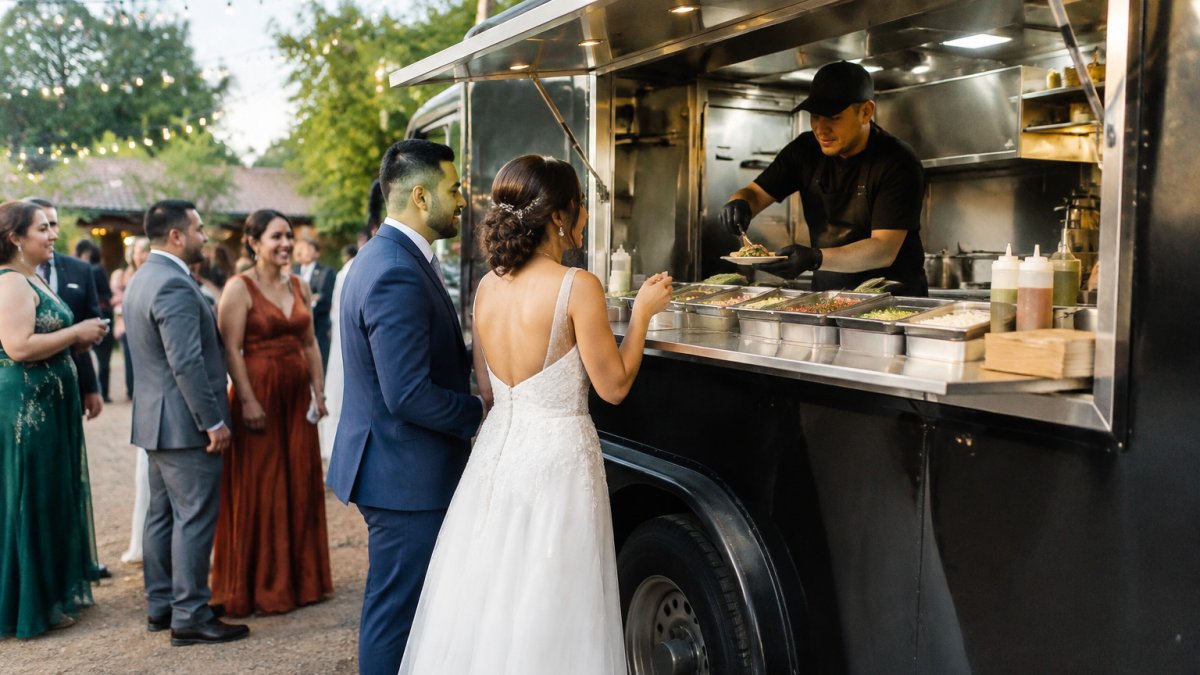
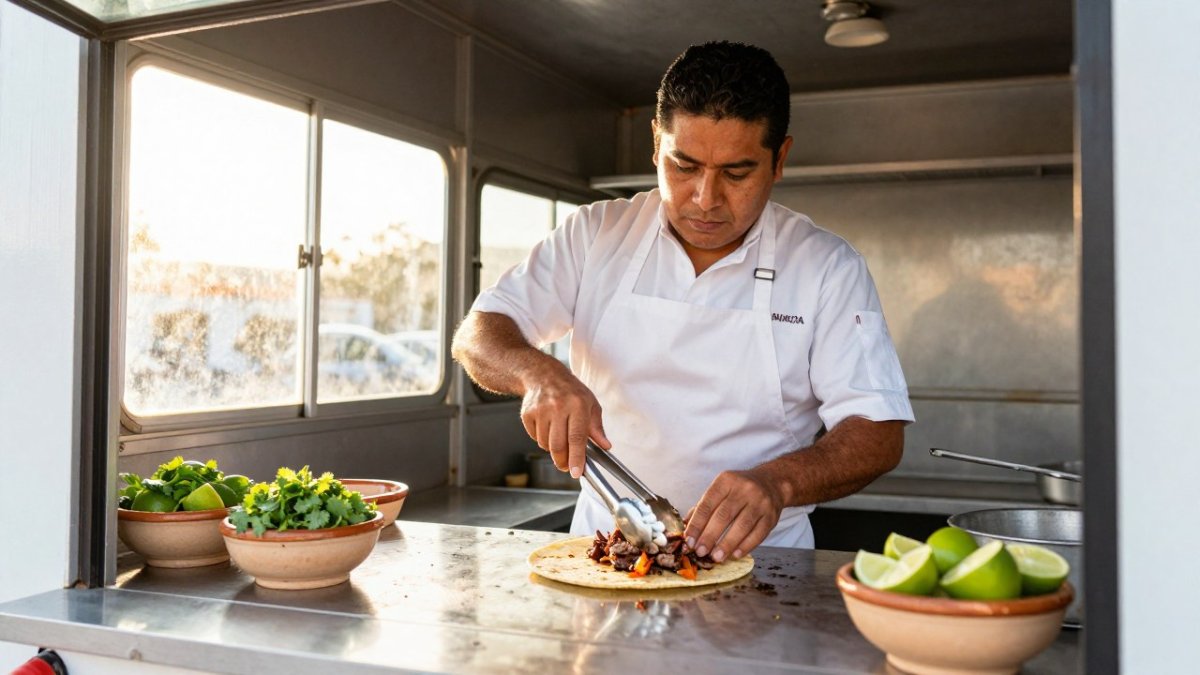
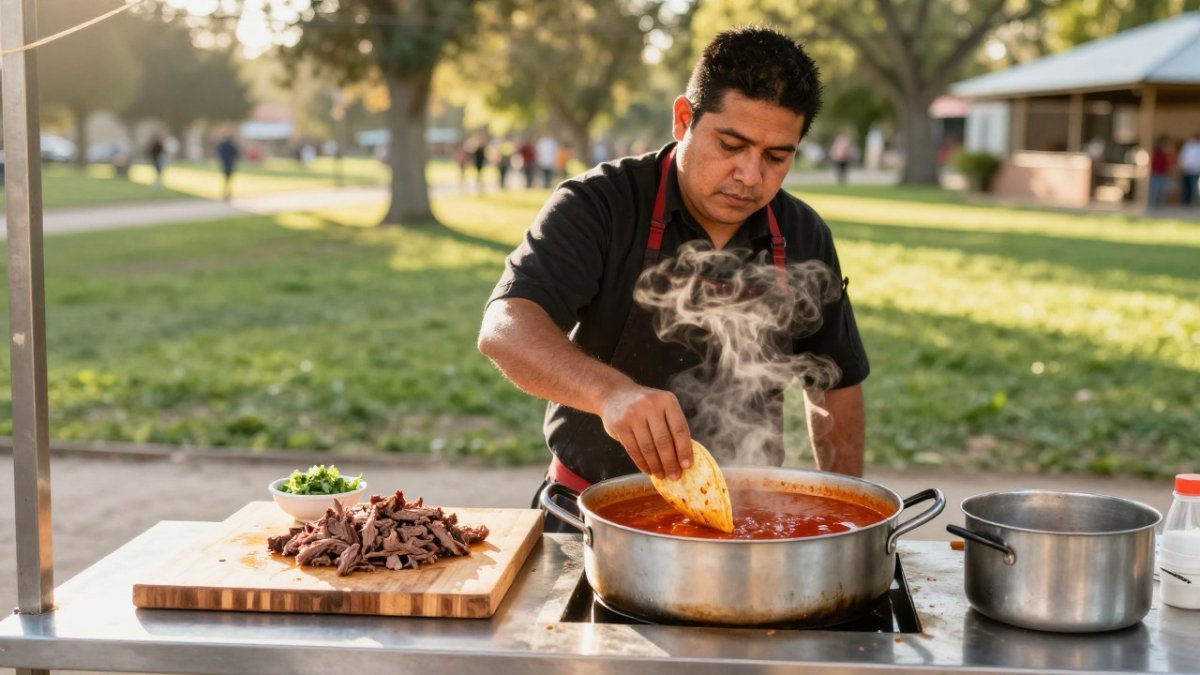
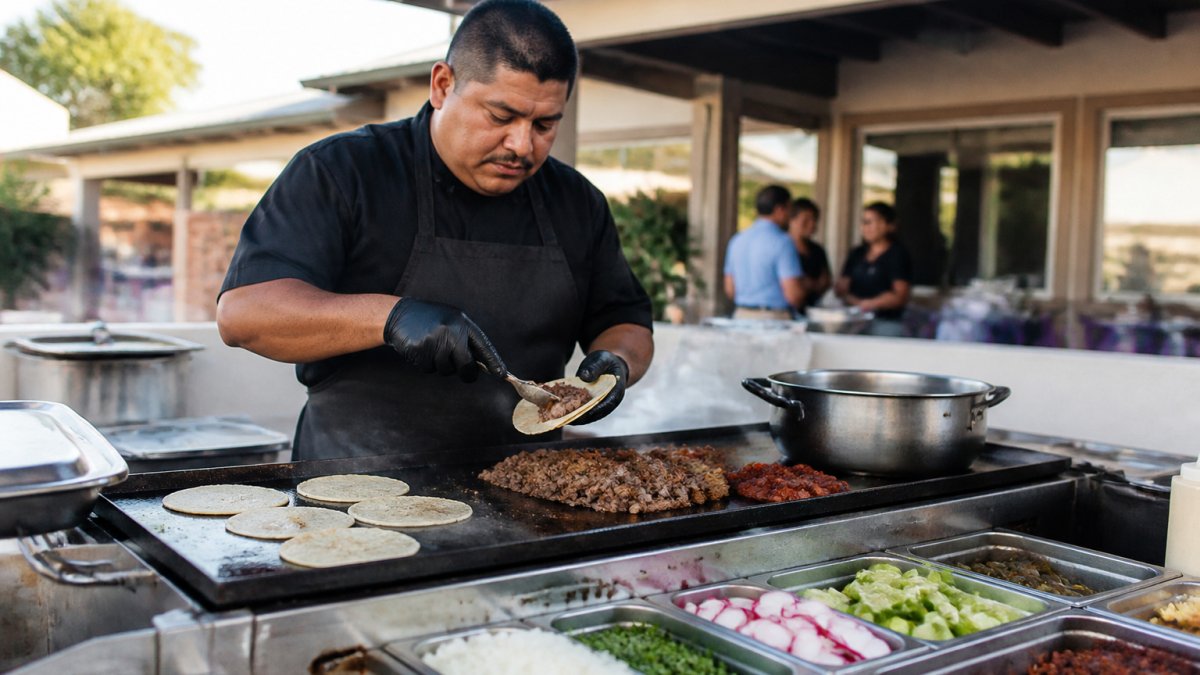
Running an on site taco cooking service means you bring the kitchen to the customer: grill, tortillas, meats and prep tables, cooked and served where the guests are.
Most of the approval work falls on the operator, not the venue. Whoever cooks, holds and serves the food usually needs a permit, and the venue often must approve the setup too.
Expect to deal with three types of approval:
- Food service permits from your local health department
- Business registration and tax approvals from your state
- Event or venue permissions from the property owner or event host
Step 1: Confirm Permits, Licenses and Business Registration
Start with paperwork before you buy a single pound of meat. Most jurisdictions require a business license, a food service permit and, if you collect sales tax, a seller's permit.
Here is a simple order to follow:
- Register your business with your state
- Apply for a sales tax permit if you sell taxable food
- Get a food service permit from your county or city health department
- Confirm whether you need a separate mobile food operation permit
Watch out: Some jurisdictions only issue permits to businesses with an approved kitchen or commissary. Ask the health department early, since it can change how you set up.
Step 2: Meet Health Department and Food Safety Standards
Health inspectors evaluate an on-site taco operation like a restaurant kitchen, but without walls, plumbing and permanent refrigeration. Most jurisdictions expect you to work from an approved base of operations and prove you can hold temperatures and prevent cross-contamination in the field.
The approved kitchen or commissary requirement
A common pattern across local health codes is that a mobile or temporary food operation must be permitted out of an approved kitchen, commissary or other licensed facility.
If you prep salsas, marinate proteins or cook beans at a commissary and finish them on site, document which steps happen where. Inspectors want high-risk prep done in a licensed facility and transport that keeps food at safe temperatures.
What inspectors actually check on site
Expect the inspector to look at the same categories every time:
- Person in charge: At least one certified food protection manager on duty, with food handler cards for the rest of the crew
- Handwashing: A dedicated handwash station with potable water, soap and single-use towels, not a shared prep sink
- Temperature control: Cold and hot holding at safe temperatures, verified with a probe thermometer
Taco-specific holding and service-line rules
Tacos create holding challenges a plated entrée does not. Proteins, salsas, guacamole, shredded cheese, crema and cut lettuce all sit on a service line while guests build their own plates. Plan for these mechanics:
- Cold toppings: Hold guacamole, crema, salsa and cut produce in shallow pans nested in ice, with the ice level at or above the food level. Replenish ice, not just the pan.
- Hot proteins: Hold carne asada, al pastor, chicken and beans at 135°F or above in chafing dishes or hot-holding cabinets. Stir and probe at least every two hours.
- Tortillas: Keep them covered and hot; uncovered tortillas invite contamination from the service line.
Transport and cold chain
Transport is where many on-site operations lose points. A simple temperature log is cheap evidence for an inspector.
Inspections and ongoing compliance
Most jurisdictions inspect temporary and mobile operations at least once per season or event, and some require you to request an inspection before each event. If you fail an inspection, ask for the specific code citation and correct it before the next event; repeat violations trigger suspensions.
The article's key on-site holding and cooling figures are summarized below.
| Control | Requirement | Note |
|---|---|---|
| Hot holding | 135°F or above | Stir and probe at least every two hours |
| Cooling step 1 | 135°F to 70°F | Within two hours |
| Cooling step 2 | 70°F to 41°F | Within four more hours |
| Reheating | 165°F for 15 seconds | Within two hours |
| Cold toppings | Ice level at or above food level | Replenish ice, not just the pan |
Step 3: Prepare Your Taco Catering Setup Checklist
A clear setup checklist keeps your team organized and helps you pass inspections for on site taco cooking. Build one list for every event and update it as you learn.
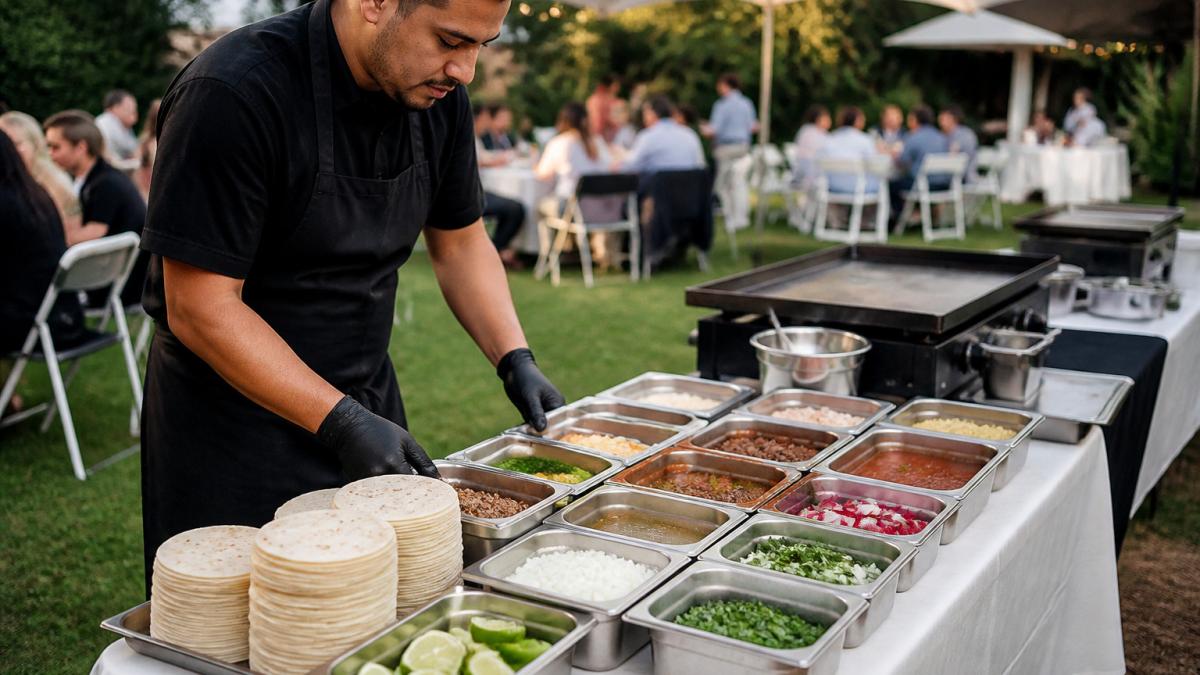
Your checklist should cover:
- Food handler certificates for everyone working the event
- Coolers and hot-holding equipment with working thermometers
- Hand sink or handwashing station with soap and towels
Pack this list the night before. Ten minutes of checking can save you from a delayed start or a failed inspection.
Step 4: Handle Live-Cooking Fire, Propane and Ventilation Controls
Live cooking adds fire risk a cold-prep catering business never faces. Propane grills, flat-top griddles and open flames need careful handling, especially under tents or near guests.
Keep these controls in place:
- Store propane tanks upright, outdoors and away from heat sources
- Keep a fire extinguisher rated for grease fires within reach of the cooking area
- Maintain at least the clearance distance the equipment manufacturer specifies from tents and canopies
Watch out: Many fire departments require a permit or inspection for open flame at events. Ask your local fire marshal before the event, not after the guests arrive.
Step 5: Plan Venue Permissions, Power, Water and Event Coordination
Venue approval is a requirement many event operators underestimate, because the health department is not the only authority with a say. The property owner, event organizer, fire marshal and sometimes the city special-events office can each impose conditions on where you set up, what fuel you use and when you load in.
Get venue approval in writing
A verbal "sure, you can cook there" is not approval. Ask the venue or event host for written confirmation of these items before you sign a contract:
- Whether open-flame cooking, propane and grills are allowed on the property
- The exact setup footprint and any setback from buildings, tents, guests or landscaping
- Load-in and load-out windows, including whether vehicles can enter the event footprint
Identify every authority with jurisdiction
Local variation is real, but it is not random. Work through this checklist to find the authorities that apply to a specific event:
- City or county health department, food service permit, temporary event permit, commissary approval
- City or county fire marshal, open-flame permit, propane storage, tent and canopy clearance, extinguisher requirements
- City or county business license office, business registration and seller's permit
- Special-events or permits office, event permit, street closure, park or public-property use
- Venue or property owner, written approval, insurance requirements, load-in rules
- Event organizer, vendor rules, setup times, power and water allocations
Call the health department and fire marshal for the jurisdiction where the event is located, not where your business is registered. A caterer based in one county often needs a temporary permit from the county where the event happens.
Fire-lane, load-in and setup logistics
Fire-lane access is a hard rule, not a suggestion. Keep your grill, propane tanks and serving line out of marked fire lanes and out of the path between guests and exits.
Load-in timing affects food safety as much as logistics. If your window is short, pre-chill coolers and pre-heat holding equipment at the commissary so cold food is not sitting in the sun.
Power, water and the host's responsibilities
Spell out in the contract what the host provides and what you bring. A common split is:
- Host provides: a level setup area, access to a standard electrical outlet if agreed, potable water if agreed, trash and recycling receptacles, and guest control around the cooking zone
- You provide: cooking equipment, fuel, handwash station and potable water for handwashing, cold and hot holding, serving utensils, and a fire extinguisher rated for grease fires
If the venue cannot supply power, plan for generator use and confirm with the fire marshal whether generator fuel storage is allowed. If water access is limited, bring a gravity-fed handwash station with enough capacity for the crew size and event length.
Insurance, contracts and customer responsibilities
Most venues require a certificate of insurance showing general liability coverage, and many ask to be named as an additional insured. Confirm the minimum limits the venue requires before the event, and check whether your policy covers off-premises cooking and propane use. Your contract should also address:
- Indemnity and who is responsible for guest injuries near the cooking area
- Cancellation and weather terms, including who bears the cost of spoiled food
- The host's responsibility to keep guests out of the cooking zone and to provide a safe, level setup surface
Event-day coordination
On the day, check in with the event organizer before you set up. Confirm the setup location, fire-lane route, power source and trash plan, and exchange cell numbers. A five-minute check-in prevents most conflicts that turn into complaints or failed inspections.
Step 6: Scale Requirements for Taco Catering for Large Events
Larger events raise the stakes. Once you cook for 50 or more guests, you need more staff, more equipment and a tighter timeline.
Plan for these changes as your event grows:
- More food handlers working in shifts
- Backup cooling and hot-holding equipment
- A second person checking temperatures and food levels
Large events also attract more scrutiny from health inspectors and fire officials. Keep your paperwork complete and easy to find on the day.
Questions to Ask a Taco Caterer Before Booking Your On-Site Service
Whether you are the caterer or the customer, these questions help you avoid surprises. Pricing depends on guest count, event date and delivery distance, so ask for a current quote on the contact page before you commit.
What permits and insurance do you carry? Ask for copies of your food service permit and certificate of insurance.
How do you handle live-fire equipment? Ask about propane storage, extinguishers and clearance from tents or canopies.
What do you need from the venue? A good caterer will tell you about power, water and parking needs early.
You can also review our frequently asked questions for more detail on how on-site service works.
Frequently Asked Questions
What does a taco caterer need to cook on-site?
An on-site taco caterer typically needs a valid food service permit from the local health department, a food handler certification for staff, proof of business registration, and a sales tax permit for the state of Texas. Requirements vary by county and city, so confirm them with the health department that covers your event location before booking.
Does a taco catering service need access to electricity or water?
Most on-site taco setups need a reliable power source for refrigeration, warming units and lighting, and a potable water supply for handwashing and cleanup. Ask your caterer what utilities they require in writing, and confirm the access points at the venue during planning.
How do you keep a taco bar safe for a large event?
Keep cold foods at 41 degrees Fahrenheit or below and hot foods at 135 degrees Fahrenheit or above, as outlined in the applicable food safety code.
What questions should you ask an on-site taco caterer before booking?
Ask whether the caterer holds a current health permit and food handler certifications, what equipment they bring, and what power, water and space they need from the venue. Ask how they handle dietary requests and whether they can share references. Pricing depends on quantity, date and delivery, so request a current quote directly from Tacos Papi Grande.