 Ultimate guide
Hire Mobile Taco Catering in San Antonio: 2026 Guide
Table of Contents
- Why Mobile Taco Catering Works for San Antonio Events
- How to Hire Mobile Taco Catering in San Antonio: A Step-by-Step Booking Checklist
- Taco Catering Cost Per Person: What Drives Your Quote
- Taco Truck Catering for Parties: Matching Service Style to Your Event
- Mini Taco Catering: A Crowd-Pleasing Option for Cocktail Hours and Office Lunches
- Taco Catering for 80 People: Scaling Service, Space, and Timing
- Permits, Insurance, and Venue Requirements in San Antonio
- Conclusion: Book Early, Ask Questions, and Feed Your Guests Well
- Frequently Asked Questions
Last Updated: October 14, 2026
Why Mobile Taco Catering Works for San Antonio Events
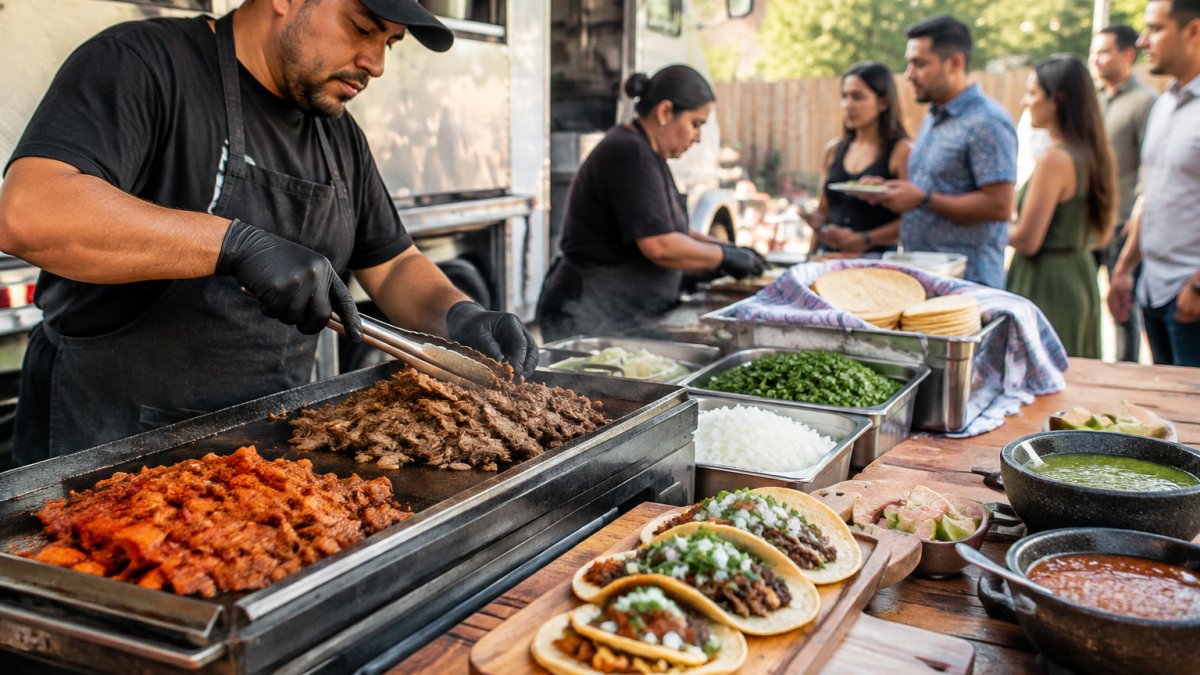
Mobile taco catering is a food service model where a vendor cooks and serves tacos on site at your event, from a truck, trailer, cart, or pop-up station.
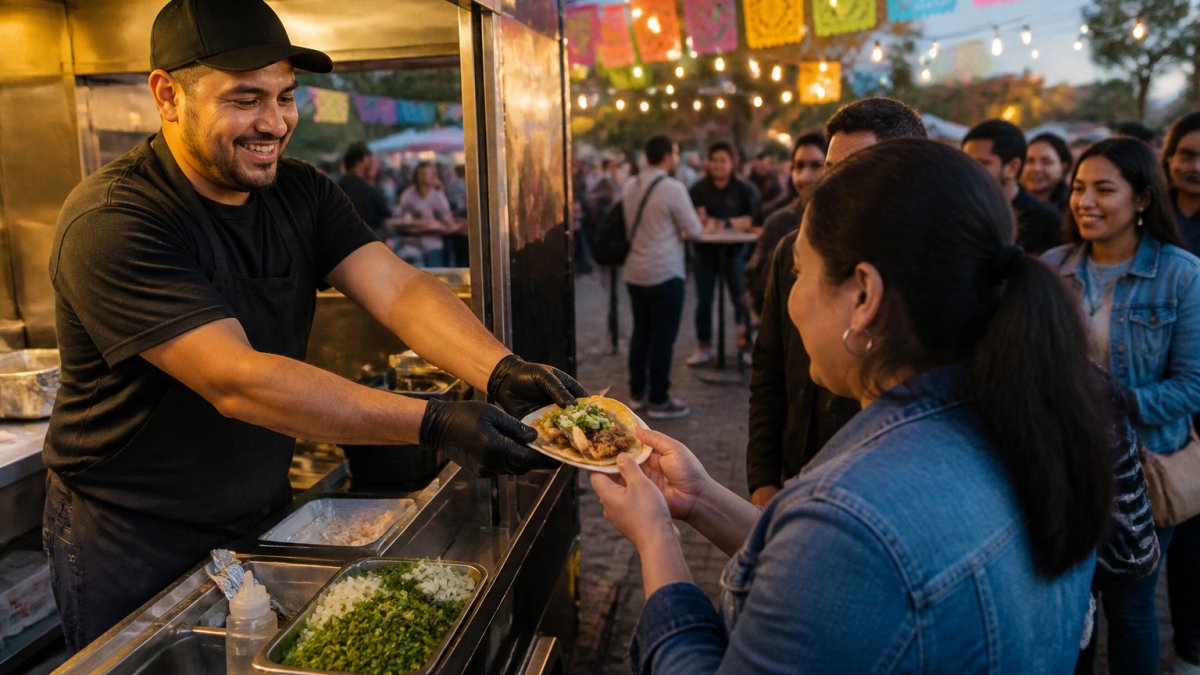
When you hire mobile taco catering in San Antonio, you get scratch-made food cooked in front of your guests, tortillas pressed and filled to order, and a setup that fits venues a traditional caterer cannot reach.
The format suits this region well.
How to Hire Mobile Taco Catering in San Antonio: A Step-by-Step Booking Checklist
Start your search four to six weeks out for standard dates, and eight to twelve weeks for peak season weekends. Good vendors book out first.
Here is the sequence we recommend to every client:
- Lock your date, guest count, and venue address. A rough headcount is fine; vendors quote per person.
- Confirm the venue allows outside food vendors. Some require an approved vendor list or a certificate of insurance.
- Request quotes from three vendors. Compare what each includes, not just the bottom-line number.
- Ask the questions below before you commit.
- Sign the contract and pay the deposit. Expect a deposit to hold your date.
- Confirm final headcount 7 to 10 days out.
- Share a day-of contact and a load-in time. Ask where the truck or cart should park.
Questions to Ask Before You Book
- Does the quote include setup, service staff, and cleanup, or is that billed separately?
- How long is the service window, and what happens if guests linger past it?
- What is the deposit amount, and is any of it refundable?
Taco Catering Cost Per Person: What Drives Your Quote
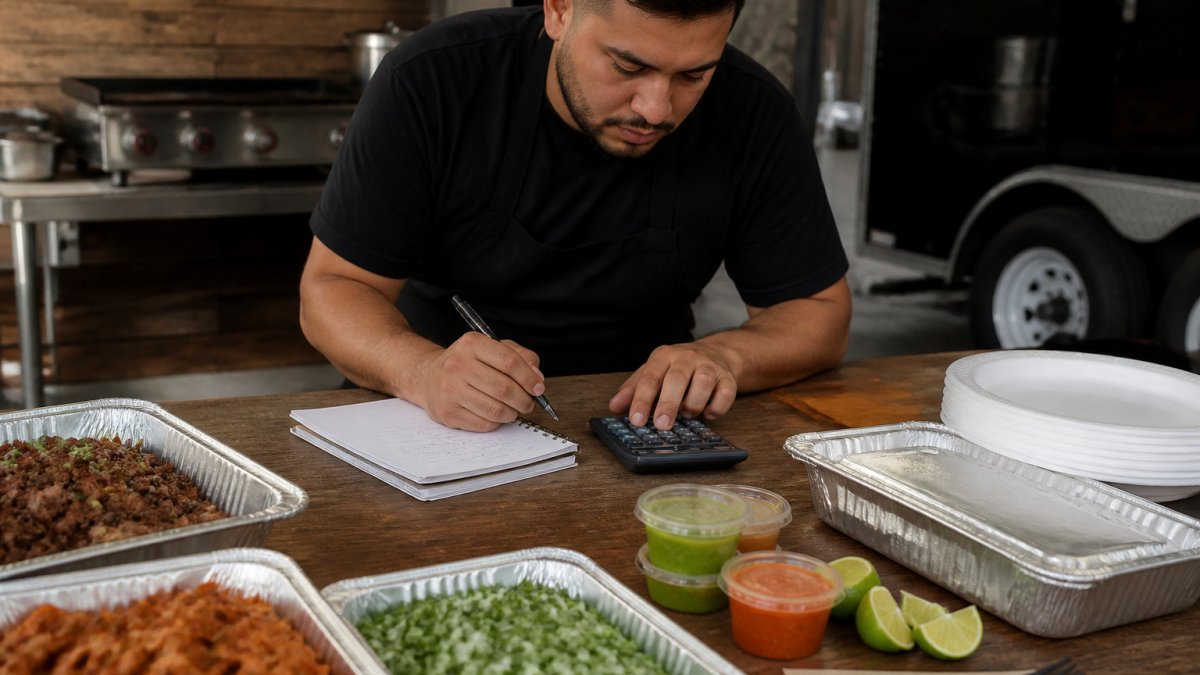
Taco catering cost per person depends on four things: guest count, protein selections, on-site cooking versus drop-off, and service window length. There is no single flat rate, and any vendor who quotes one without asking about your event is guessing.
The biggest cost driver is service style. Drop-off catering costs less than full-service catering with cooks and servers on site.
How to Read an Itemized Taco Catering Quote
Most vendors build a quote from the same five line items. Ask for each separately, in writing, so you can compare vendors on the same basis.
- Food and protein selection. Priced per person and usually tiered. A two-protein package costs less per head than a four-protein package. Scratch-made birria, al pastor, and asada carry different ingredient costs, so a birria quote lands higher than one built around chicken or picadillo.
- Sides, salsas, and add-ons. Rice, beans, chips, guacamole, salsas, and aguas frescas are often quoted separately from the taco line. Confirm whether they are included or per-person add-ons.
- Service staff and on-site cooking. Full-service means cooks and attendants on site, and that labor is the largest swing between a drop-off and full-service quote for the same headcount.
- Equipment and setup. Grills, comals, warmers, chafing dishes, tables, linens, and the cart or station itself. Some vendors bundle this; some bill a flat setup fee.
- Travel and service window. Delivery distance and the length of the service window both move the number. A 60-minute window and a 3-hour window are not the same job.
What Changes the Per-Person Number
- Guest count. Per-person pricing usually drops as headcount rises, because fixed costs (travel, setup, equipment) spread across more plates. A 30-guest and an 80-guest event rarely share the same rate.
- Service duration. A longer window means more staff hours and more food held hot. Confirm what your quote covers and what an extension costs.
- Menu breadth. More proteins, more sides, and more add-ons raise the per-person number even when the guest count is unchanged.
A Practical Way to Budget
Build your budget from the per-person food line first, then add staff, equipment, travel, and any venue vendor fee as separate line items. Because pricing depends on quantity, dates, and delivery, we quote each event individually. U.S. Small Business Administration guidance on hiring food vendors recommends getting written, itemized quotes so you can compare line by line rather than on a single total.
Taco Truck Catering for Parties: Matching Service Style to Your Event
Taco truck catering for parties comes in four formats, and picking the right one matters more than picking the vendor. Each changes your budget, space needs, and guest experience.
| Format | Best For | Space Needed | Service Style |
|---|---|---|---|
| Food truck | Large outdoor events, 100+ guests | Drive-up access, flat ground | Guests order at the window |
| Food trailer | Mid-size parties, 50-150 guests | Parking pad, power access | Window or buffet line |
| Food cart | Cocktail hours, office lunches | Small footprint, indoor-friendly | Attendant-served |
| Pop-up station | Weddings, seated events | Table space, indoor or covered | Staff builds plates to order |
Full-service on-site cooking suits weddings and corporate events where presentation matters. A truck window works better for casual parties where guests mingle and graze. For office events, a cart or pop-up station keeps service fast and contained.
Mini Taco Catering: A Crowd-Pleasing Option for Cocktail Hours and Office Lunches
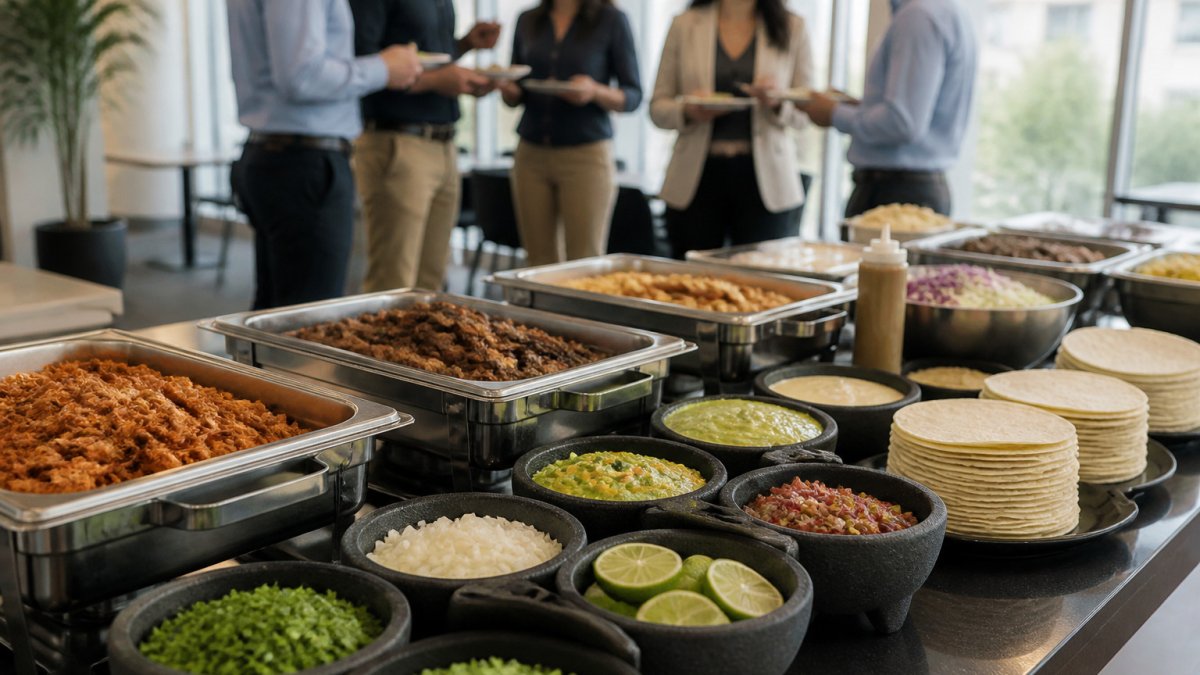
Mini taco catering serves smaller, two-bite tacos designed for standing guests. It suits cocktail hours, networking events, and office lunches where people eat while talking rather than sitting down.
The advantage is pacing. Full-size tacos require two hands and a plate; mini tacos take a bite or two, keeping guests moving and conversation flowing.
Two practical notes. First, plan on more pieces per guest than with full-size tacos.
Taco Catering for 80 People: Scaling Service, Space, and Timing
Taco catering for 80 people requires on-site cooking, not drop-off. At that headcount, traveling food cools before the last guest is served, and you need a service line that moves roughly 80 plates in under an hour.
Here is how we would plan an 80-guest event:
- Service window: 60 to 90 minutes of continuous service, with a buffer if guests arrive late.
- Space: room for the cooking setup plus a clear guest queue that does not block the bar or entrance.
- Staffing: enough attendants to run two parallel lines during the initial rush.
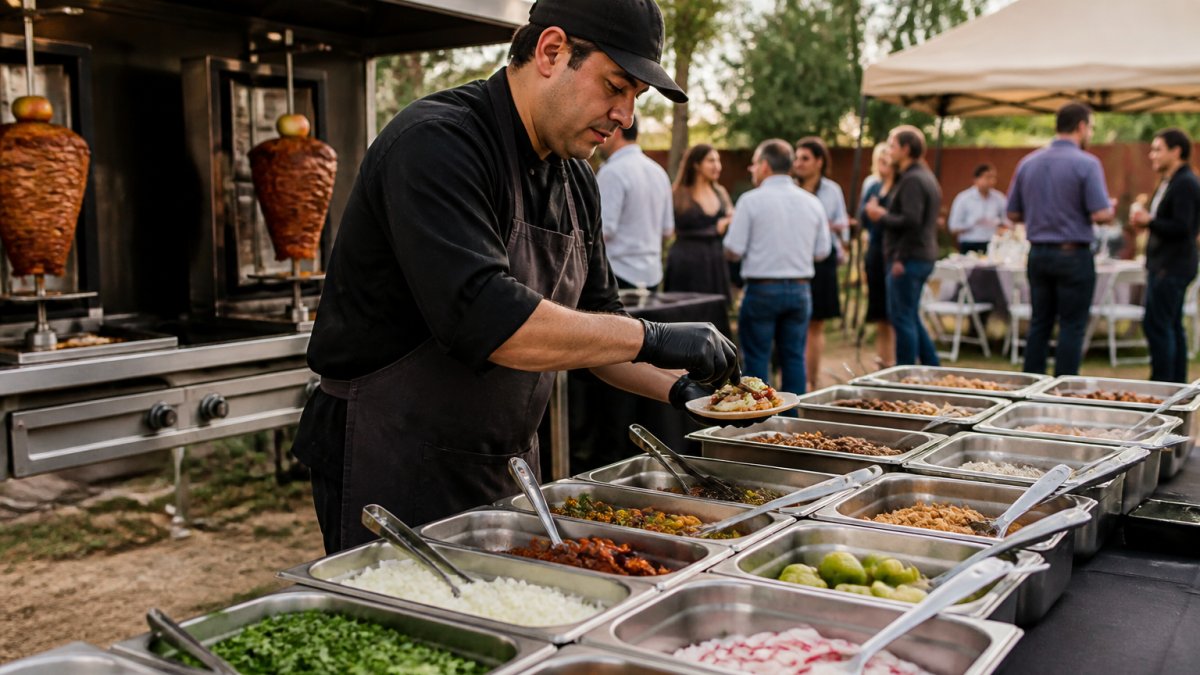
For parties of 50 or more, full-service on-site cooking means we arrive with the equipment and cook at your venue, the difference between a caterer who drops off trays and one who runs a kitchen at your event.
Permits, Insurance, and Venue Requirements in San Antonio
Vendors operating in this area need a mobile food vendor permit and food handler certification, and most venues ask for a certificate of insurance before allowing an outside caterer on site. Requirements vary by jurisdiction, so confirm specifics with your local health department and venue rather than assuming.
The Three Documents to Collect Before the Event
As the host, you are stuck if a vendor shows up without the right paperwork. Collect these three items in writing, by email, well before the event.
- Mobile food vendor permit. Issued by the local health department for the event's jurisdiction, it authorizes the vendor to operate a mobile food unit. Ask for a copy and check it is current and covers the type of unit showing up, a truck, trailer, cart, and pop-up station are not always covered by the same permit.
- Food handler certification. Individual food workers typically must hold a food handler card. Ask the vendor to confirm everyone working your event is certified, not just the owner.
- Certificate of insurance (COI). This is the document your venue will ask for. It shows the vendor's general liability coverage, policy limits, and effective dates. If your venue requires it, the vendor can usually add the venue as an additional insured.
How to Read a Certificate of Insurance
A COI is short, and most hosts skim it. Read four fields:
- Insured name. It should match the vendor you hired, not a parent company or unrelated entity.
- Policy effective and expiration dates. The policy must be active on your event date; one that expired last month is not proof of coverage.
- General liability limits. Confirm the limits meet your venue's requirement. Venues often set a minimum, and a certificate below it will be rejected.
Venue Approval and Fire-Safety Considerations
Permits and insurance are only half the picture. The venue has its own rules that can override everything else.
- Outside vendor policy. Some venues allow any licensed vendor; some require an approved list; some charge a vendor fee or a percentage of catering revenue. Confirm this before signing a catering contract.
- Fire-safety and equipment rules. A truck or trailer with a generator, propane, or open flame may trigger fire-safety requirements, including an on-site fire extinguisher, clearance from structures, or a fire watch. Indoor carts and pop-up stations face different rules than outdoor trucks.
- Noise, generator, and operating-hour restrictions. Many venues limit generator use, music, or hours. A truck idling past the allowed hour can end your service early.
FDA Food Code guidance on mobile food units sets the national baseline for safe food handling, and local health departments layer their own rules on top. Ask your vendor for proof of permit and insurance in writing before the event, and confirm venue requirements in writing too, a verbal okay from a venue coordinator is not the same as a signed vendor approval.
Conclusion: Book Early, Ask Questions, and Feed Your Guests Well
Booking the right vendor comes down to preparation: firm headcount, a clear service style, and a written quote you understand line by line.
Tacos Papi Grande is a 501(c)(3) nonprofit mobile caterer serving scratch-made birria, al pastor, and asada across the New Braunfels, Austin, and San Antonio areas.
Get started with Tacos Papi Grande and book a date that feeds your guests well while supporting a local mission.
Frequently Asked Questions
How much does mobile taco catering cost per person?
Taco catering cost per person depends on your menu selections, guest count, and service style. A simple drop-off taco bar with two proteins typically costs less per person than a full on-site cooking setup with multiple sides and late-night service. For an accurate quote, share your date, guest count, and menu preferences with your caterer. Tacos Papi Grande provides transparent pricing based on your specific event needs, and free delivery applies for groups of five or more.
How far in advance should I book a taco truck for an event?
For most events, book three to six weeks ahead. Popular dates like weekends in spring and fall fill quickly, so four to eight weeks is safer for weddings and large corporate functions. If your event falls during a busy season or you need a specific time slot, reach out even earlier. Last-minute bookings are sometimes possible for smaller groups, but your choice of menu items and service times will be limited.
How many tacos should I order per guest?
Plan on three to four tacos per guest for a meal, or two to three if you are also serving sides like rice, beans, and chips. For mini taco catering, guests often eat four to six mini tacos since they are smaller. If your event runs longer than three hours or includes late-night service, add one or two extra tacos per person. Your caterer can help you fine-tune the count based on your menu and guest list.
Can a taco truck cater an event at a private venue?
Yes, most mobile taco caterers can serve at private venues, including backyards, parks, office parking lots, and rented event spaces. The key is confirming the venue allows mobile food units and checking whether they require a permit, insurance certificate, or a specific setup area. Share your venue details with your caterer early so they can confirm logistics. Tacos Papi Grande offers full on-site cooking for parties of 50 or more, and can adapt to most private venues in the San Antonio area.
What should I ask a taco caterer before booking?
Ask about their service style (drop-off versus on-site cooking), what is included in the quoted price, how they handle dietary restrictions like gluten-free or vegetarian requests, and whether they carry liability insurance. Also confirm their arrival and setup time, how many staff will be on site, and their cancellation policy. Request references from past corporate or private events. A reliable caterer will answer these questions directly and provide a written quote with clear terms.
How much space does a mobile taco truck need?
A food truck or trailer typically needs a flat parking area of about 20 to 30 feet long and 10 feet wide, plus room for guests to line up safely. For on-site cooking setups with a tent and tables, plan for a 15-by-15-foot area or larger. Confirm your venue has vehicle access, and check whether the surface is paved or grass. Your caterer can do a site visit or review photos to confirm the space works before the event.