 Ultimate guide
How to Plan an Event Catering Budget Step by Step
Last Updated: November 2, 2026
Quick Summary
To plan a catering budget, first set your event goal and total spend, then confirm your guest count. Build a line-item worksheet covering food, beverages, staffing, rentals, delivery, service charges, taxes and contingency. Compare every quote on an all-in cost per guest basis.
- Write the event purpose in one sentence and set a total budget before requesting quotes.
- Build a worksheet with four columns: Category, Line Item, Quantity × Unit Cost, and Notes.
- Divide the all-in total by your confirmed guest count to compare quotes fairly.
- Ask every caterer to itemize delivery, staffing, service charge, gratuity, rentals and taxes.
- Limit menu choices and select buffet or drop-off service to reduce costs without sacrificing quality.
Table of Contents
- Start With Your Event Goals and Overall Budget
- Build a Catering Budget Worksheet With Line Items
- How to Calculate Catering Costs Per Person
- Event Catering Cost Per Person: Typical Cost Drivers
- Hidden and Variable Fees to Budget For
- Ways to Save Money on Event Catering Without Cutting Quality
- Book Your Catering and Lock In Your Budget
- Frequently Asked Questions
Start With Your Event Goals and Overall Budget
Planning catering starts with one question: what is this event for, and how much can you spend on it? Settling both before you request a quote helps, because the answers shape the menu, the service style and the guest count.
Write down the event's purpose in one sentence, such as "rewarding the sales team" or "celebrating a family graduation." Then set a total budget that includes food, drinks, rentals, staffing and any venue costs.
Defining Guest Count and Attendance Buffer
Guest count drives nearly every catering cost, so estimate it carefully. Invitations rarely produce a perfect headcount. Ask for RSVPs, then plan for a small gap between who says yes and who shows up. Many planners order for the confirmed number plus a modest buffer, since running short creates a worse problem than having leftovers.
Build a Catering Budget Worksheet With Line Items
A worksheet is the difference between a budget that survives contact with a caterer's invoice and one that quietly falls apart. Build it in a spreadsheet with four columns: Category, Line Item, Quantity × Unit Cost = Line Total, and Notes.
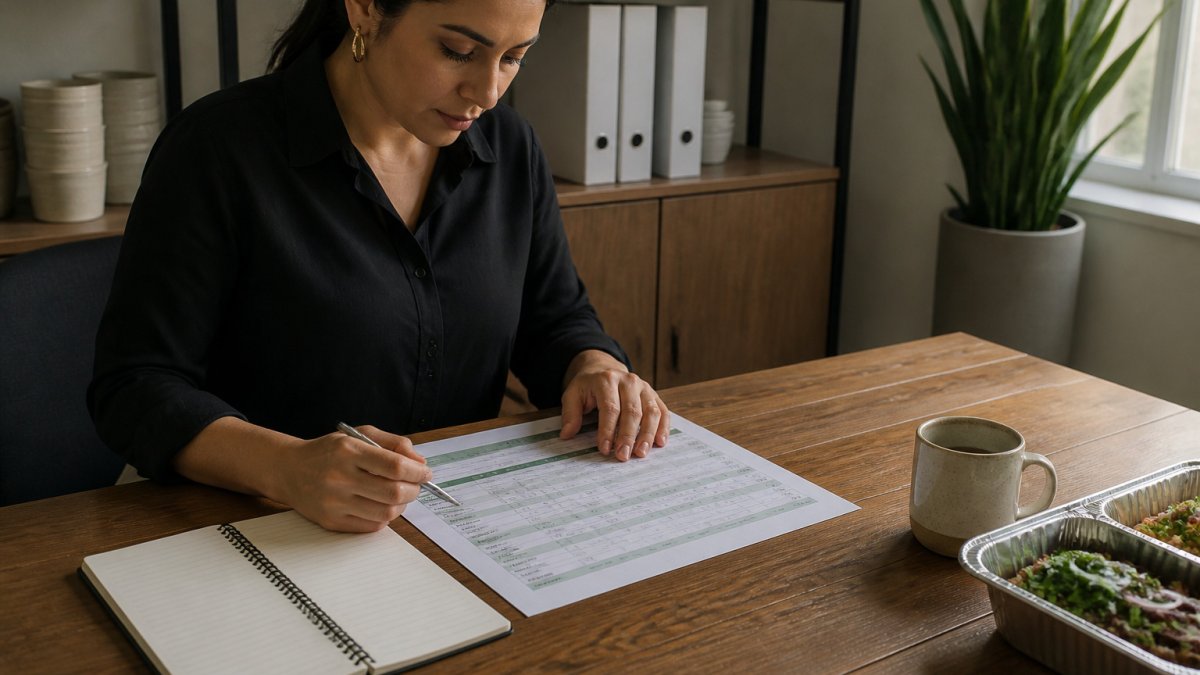
Start with these eight categories. They cover nearly every catering invoice:
- Food, proteins, sides, salads, appetizers, desserts
- Beverages, water, soda, coffee, tea, alcohol if served
- Staffing, servers, chefs, bartenders, on-site cooking labor
- Rentals, tables, linens, chafing dishes, plates, glassware, utensils
- Delivery and setup, drop-off, on-location cooking, setup time
- Service charges and gratuity, often a percentage of the food and beverage subtotal
- Taxes, sales tax on taxable items in your state and locality
- Contingency, a reserve for count changes and add-ons
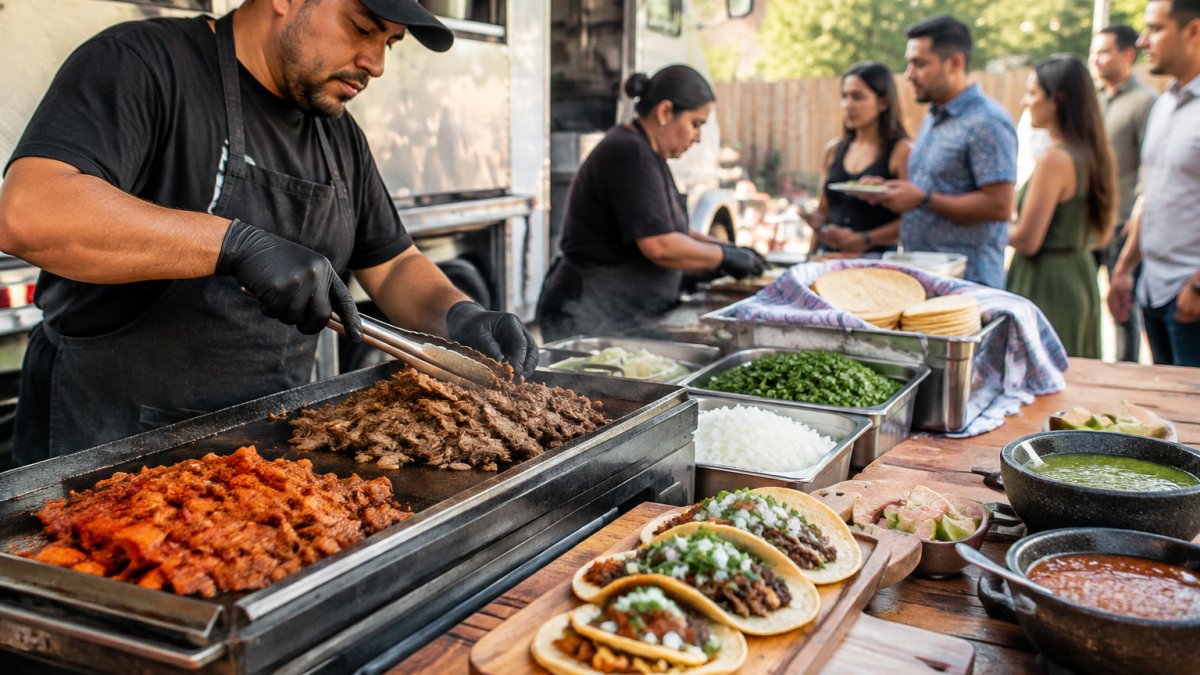
Under each category, add line items with a quantity and a unit cost. For a taco bar for 60 guests, the Food category might read: birria for 60 at a per-person rate, al pastor for 40, asada for 40, tortillas by the dozen, rice and beans by the half-pan, salsas and garnishes per guest.
The Worksheet Formulas
Three formulas do most of the work:
- Line total = Quantity × Unit Cost
- Category total = Sum of all line totals in that category
- All-in total = Sum of every category total, including service charge, tax, and contingency
The all-in total is the number that matters. A quote that looks cheap on food can land well above other quotes once delivery, staffing, and gratuity are added.
A Worked Example
Suppose your food and beverage subtotal comes to $2,400 for 60 guests. A 20 percent service charge adds $480, bringing the subtotal to $2,880. If sales tax in your area is 8 percent and applies to the full amount, that adds about $230, for a pre-contingency total near $3,110. Add a contingency reserve and your working budget grows accordingly.
Track Estimated vs. Actual
After the event, add an Actual column next to each line. The gap between estimated and actual shows where your assumptions were wrong, usually delivery, staffing, or count changes. Carry those corrections into the next event's worksheet and your estimates get sharper each time.
IRS guidance on recordkeeping for business meals and events
How to Calculate Catering Costs Per Person
To estimate event catering cost per person, divide your food and service budget by your confirmed guest count. If your total food budget is $1,200 for 60 guests, the cost per person is $20.
Then add the costs that sit outside the per-person rate. Delivery, setup, gratuity and rentals often appear as separate charges. A low per-person rate can cost more overall once these are included, so always ask for the all-in total.
Choosing Buffet, Plated, or Drop-Off Service Style
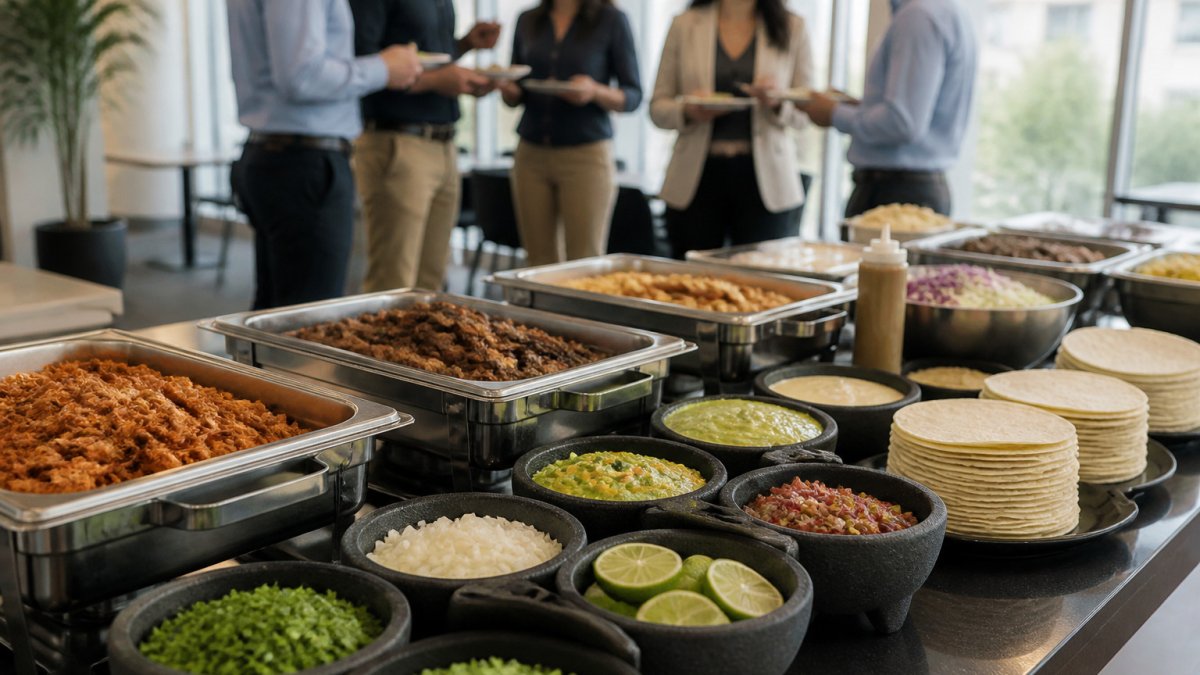
Service style changes labor and presentation costs. Buffet service is usually the most economical for large groups because it needs fewer servers and lets guests serve themselves.
Match the style to the event. A corporate lunch for 12 rarely needs plated service, while an event with 80 guests and a formal feel may justify on-site cooking.
Event Catering Cost Per Person: Typical Cost Drivers
Several factors push catering costs up or down. Protein choice matters: premium meats cost more than vegetarian options. Menu variety matters too, since each extra dish adds prep time and waste.
Dietary requirements are another cost driver. Gluten-free, vegetarian or no-cilantro requests may need separate preparation. Check the frequently asked questions for common policies on fees and minimums.
Hidden and Variable Fees to Budget For
Most catering quotes are built from a base per-person or per-item rate plus a stack of fees that only appear on the final invoice. To compare quotes fairly, ask every caterer to itemize the following, and write each answer into your worksheet's Notes column.
Delivery and Setup
Delivery fees are often flat within a radius and per-mile beyond it. Ask for the radius, the per-mile rate, and whether the fee covers setup or drop-off only. On-location cooking typically adds equipment, a chef, and setup time, so it carries a higher delivery-and-setup line than drop-off service.
Staffing and Labor
Server and chef hours are usually billed per person per hour, often with a four-hour minimum. Ask whether travel time is billed, whether there is an overtime rate after a set hour, and whether a bartender is required if alcohol is served.
Service Charge vs. Gratuity
A service charge is a percentage the caterer adds to cover labor and overhead, commonly in the 15 to 22 percent range, and it is not the same as a tip. Ask whether the service charge is distributed to staff and whether gratuity is expected on top. If both appear, budget for both.
Rentals
Chafing dishes, linens, plates, and glassware may be included, rented separately, or supplied by the venue. Ask for the per-item rental rate and whether a loss or breakage fee applies.
Minimum Spends and Small-Order Surcharges
Many caterers set a minimum order amount, and smaller orders may carry a surcharge even when they meet a free-delivery threshold. Confirm the minimum, the surcharge, and whether the minimum applies before or after tax and service charge.
Taxes
Sales tax rules vary by state and locality, and some items, prepared food versus packaged goods, for example, may be taxed differently (Food and Food Products Sold by Food Stores and Similar Establishments). Ask the caterer which lines are taxable and at what rate, and confirm whether the service charge is taxed.
Count Changes, Cancellations, and Price Changes
Ask for the guaranteed-count deadline, the penalty for dropping below it, the cancellation schedule and deposit terms, and whether quoted prices are locked or subject to change. Get all of it in writing before you sign.
Compare Quotes on an All-In Basis
Once each quote is itemized, total every line, food, beverage, staffing, rentals, delivery, service charge, gratuity, and tax, and divide by your confirmed guest count. That all-in per-guest figure is the only fair comparison. A quote with a lower food rate but a higher service charge and delivery fee can easily cost more overall.
FTC guidance on advertising and pricing claims
Ways to Save Money on Event Catering Without Cutting Quality
The most effective savings come from limiting menu choices. Two or three well-made proteins with a couple of sides cost less than a long menu with many specialty items, and they reduce food waste.
Plan your guest count precisely, since over-ordering is a common source of waste. Book early, when pricing and availability are easier to lock in.
Book Your Catering and Lock In Your Budget
Once your goals, guest count and worksheet are set, you are ready to book. If you have questions about quotes or availability for your date, contact Tacos Papi Grande directly.
Tacos Papi Grande's scratch-made birria, al pastor and asada suit team lunches, private parties and larger events. Our free delivery for groups of five or more and on-location cooking for parties of 50 or more give you clear options at each scale.
Frequently Asked Questions
How do you calculate a catering budget for an event?
Start with your total guest count, then multiply by the per-person cost of the service style you choose, such as buffet or plated. Add line items for staffing, rentals, delivery, service charges, gratuity, and sales tax. Include a contingency of about 10 percent for guest count changes. Pricing varies by quantity, date, and delivery distance, so request a written quote from your caterer, such as Tacos Papi Grande, on its website to confirm current figures before finalizing your budget.
What percentage of an event budget should go to catering?
Catering is often one of the largest line items in an event budget, and the share depends on the event type and the service level you choose. Many planners set catering aside first because food affects guest satisfaction more than almost any other element. Decide your total event budget and goals, then allocate a portion to food and beverage based on how central the meal is to the event. A lunch meeting may spend a larger share than a standing reception with light bites.
What costs should an event catering budget include?
A complete catering budget covers the food itself, plus staffing, equipment or rentals such as serving utensils and chafing dishes, delivery and setup fees, service charges, gratuity, and sales tax. Beverages, disposable goods, and dietary accommodations such as gluten-free or vegetarian options can add cost as well. Listing each as a separate line item makes it easier to compare quotes and spot where the total can shift.
How much food should you budget per person for an event?
Food quantity depends on meal length, time of day, and whether guests are also eating elsewhere. For a full meal, plan on a generous portion per guest and add extra for a buffer, since running short costs more in guest experience than a little leftover food. Ask your caterer how they size portions and whether they will adjust quantities if the headcount changes. Confirm the final guest count with your caterer several days ahead to limit food waste and avoid overpaying.
How can you reduce catering costs without sacrificing quality?
Limit the menu to a few proteins and sides instead of many choices, which reduces both prep time and waste. A buffet often costs less than plated service because it requires fewer servers. Schedule events at off-peak times when available, confirm the guest count early, and compare several written quotes side by side. Ask whether delivery and setup can be bundled rather than charged separately.
How far in advance should you book event catering?
Book as early as your date and budget are set, especially for weekends and peak seasons, when caterers fill up quickly. Booking early gives you time to compare quotes, confirm the menu, and finalize dietary accommodations. Confirm the final headcount and any changes in writing before the deadline your caterer specifies.
What questions should you ask a caterer before booking?
Ask what is included in the quoted price, including delivery, setup, staffing, rentals, gratuity, and taxes. Confirm the minimum spend or minimum order, how dietary requests such as no cilantro or gluten-free meals are handled, and how quickly they can deliver. Request references from recent clients with similar events, and ask whether the caterer will cook on-site for larger gatherings and what equipment that requires.
How do you estimate catering costs for different event sizes?
Costs rise with guest count, but not always in a straight line, because fixed charges such as delivery and minimum spend apply regardless of size. Smaller groups may hit minimums that raise the per-person cost, while large events may qualify for better rates on bulk orders. Build separate estimates for small, medium, and large guest counts so you can see how the totals change, then choose the scenario closest to your expected attendance.