 Ultimate guide
Managing Food Allergies for Corporate Catering Events
Quick Summary
Managing food allergies for corporate catering means assigning one owner per step, collecting restrictions privately, getting the caterer's plan confirmed in writing, and preventing cross-contact through separate prep and serving. Labeling every dish with its ingredients and major allergens lets guests choose safely.
- Send a private allergy form and collect responses well before the event.
- Require the caterer to confirm the allergy plan and labeling in writing at least three business days before.
- Prepare allergen-free items first or separately, using dedicated utensils and serving spoons.
- Label every dish, including sides, sauces, and garnishes, with its major allergens.
- Never describe a dish as allergen-free unless the caterer has confirmed it and the label is verified.
Table of Contents
- Why Food Allergies Matter at Corporate Catering Events
- Building a Corporate Event Allergy Workflow With Owners and Deadlines
- Collecting Attendee Allergy Information Privately
- Questions to Ask a Caterer About Food Allergies
- Preventing Cross-Contact in Catering Before and During Service
- Food Allergen Labeling for Catered Events
- Food Allergy Catering Checklist and Event-Day Contingencies
- Booking Your Next Team Lunch With Tacos Papi Grande
- Frequently Asked Questions
Why Food Allergies Matter at Corporate Catering Events
Food allergies affect a real share of the workforce, so a team lunch or company function can put someone at risk even when the menu looks simple, which is why careful planning for corporate catering matters. Last Updated: October 29, 2026
This guide covers how to plan, label, and serve food so every guest can eat safely. The principles apply to office lunches and larger functions alike.
Food allergies are a safety issue, not a preference. A reaction can happen from a trace amount of an allergen, which is why cross-contact during preparation matters as much as the ingredient list.
Building a Corporate Event Allergy Workflow With Owners and Deadlines
Most allergy problems at corporate events come from unclear responsibility, not bad intentions. Someone assumes the caterer knows, the caterer assumes the office sent the list, and nobody checks the buffet before lunch.
A practical workflow assigns one owner for each step and sets a deadline for each. A sample timeline:
| Step | Owner | Deadline |
|---|---|---|
| Send attendee allergy form | Event organizer | 10 business days before |
| Compile and review responses | Event organizer | 7 business days before |
| Share summary with caterer | Event organizer | 5 business days before |
| Confirm menu and labeling plan | Caterer | 3 business days before |
| Brief serving staff | Caterer or on-site lead | Day of, before service |
Give the caterer a single point of contact and require written confirmation of the plan. Verbal assurances are easy to forget.
Collecting Attendee Allergy Information Privately
Ask about allergies in a short, private form rather than an open group email. Many people won't mention a restriction in front of colleagues, and some restrictions are personal health information they shouldn't have to share publicly.
Keep the form simple:
- Identify any food allergies or intolerances, and the specific ingredients to avoid
- Note any dietary choices, such as vegetarian or gluten-free eating
- State whether the restriction is a medical allergy or a preference, since the handling differs
Tell attendees how their information will be used and who will see it. Privacy-conscious collection gets more honest responses.
Questions to Ask a Caterer About Food Allergies
Before you book, a caterer should be able to answer specific questions clearly and in writing. Review common questions about our policies to see how we approach allergy handling.
Can you accommodate our specific restrictions? Share your summarized list and ask which items they can make safely and which they cannot.
Who will be on-site during service? A named lead who knows the plan is more reliable than a delivery driver handing off food.
What is your cross-contact protocol? Ask them to describe, step by step, how a gluten-free or nut-free dish moves from storage to the plate.
Contract Clauses and Accountability
Put the allergy plan in the contract, not just in email. Include:
- A written list of confirmed safe items and items that cannot be made safe
- A requirement that the caterer provide written confirmation of the menu and labeling plan at least three business days before the event
- A named on-site lead and a backup contact with a phone number
Assessing Capability Before You Book
Use a short scorecard when comparing caterers. Ask each one the same questions and note whether the answers are specific or generic. A caterer who can describe their kitchen layout, their utensil color-coding, and their staff briefing process is more reliable than one who simply says they "handle allergies all the time."
Questions like these also help you compare caterers fairly.
Preventing Cross-Contact in Catering Before and During Service
Cross-contact occurs when an allergen transfers from one food to another through shared surfaces, utensils, oil, or hands.
Before service, the caterer should:
- Prepare allergen-free items first, or in a separate area with clean equipment
- Use dedicated utensils and serving spoons for each dish
- Store restricted items apart from the rest of the food, with sealed containers
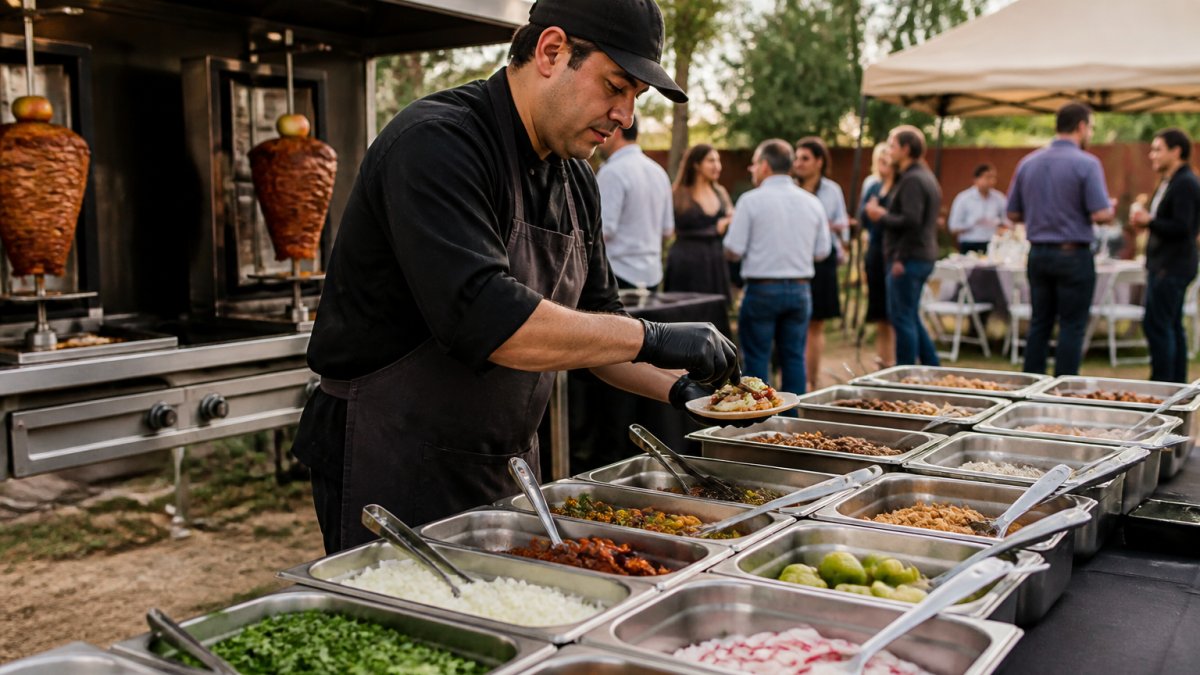
During service, the buffet needs its own controls. Place allergen-free items at a separate station, not at the end of a shared line where guests may reach across.
Cross-contact can also happen through a guest's own plate. Consider individually plated or served items for guests with severe allergies, which is standard practice at many formal functions.
Food Allergen Labeling for Catered Events
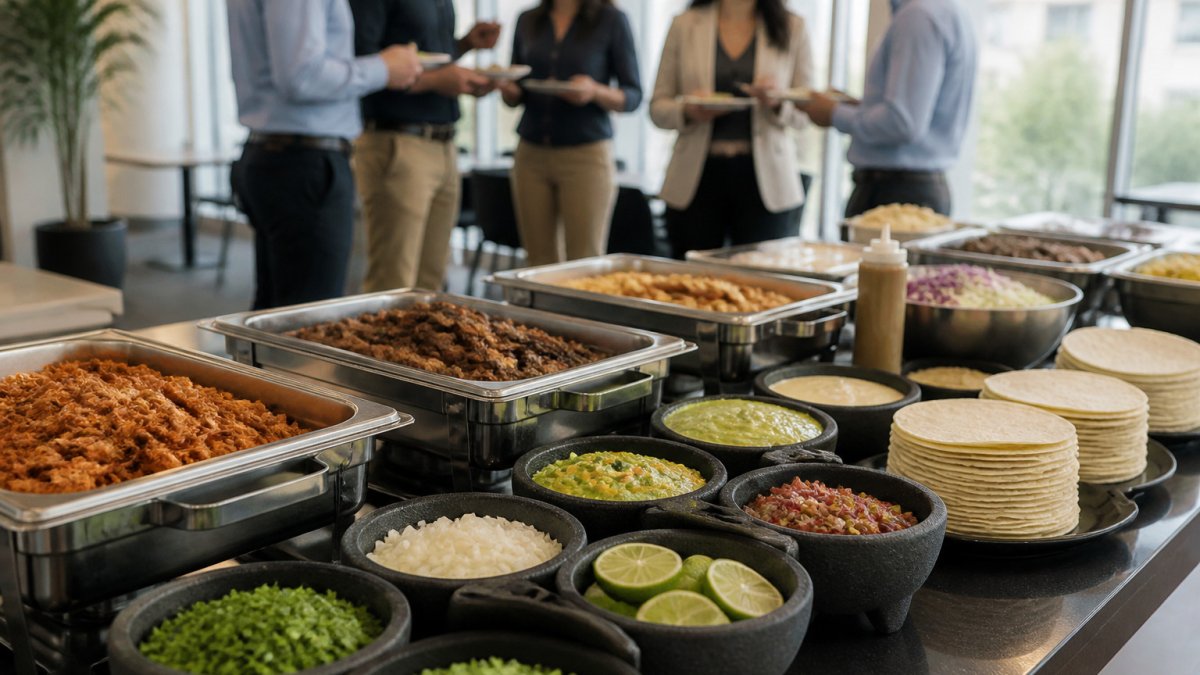
Clear labels let guests make their own safe choices. Label every dish, including sides, sauces, and garnishes, not just the main entrée.
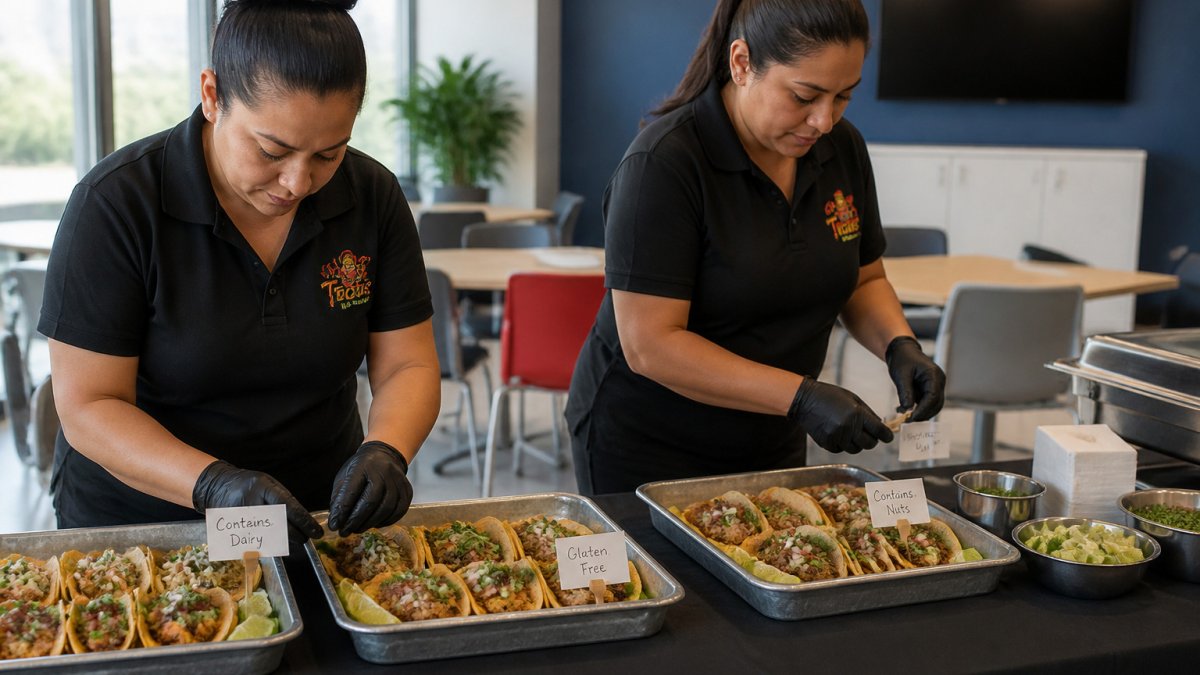
Each label should list the dish name and the major allergens it contains.
Watch for hidden allergens. Sauces, marinades, broths, and pre-made tortillas often contain milk, wheat, soy, or sesame. Confirm these ingredients from the original packaging, not from memory.
Food Allergy Catering Checklist and Event-Day Contingencies
Use this checklist from planning through service:
- Attendee allergy form sent privately and responses collected
- Summary of restrictions shared with the caterer in writing
- Caterer confirmed which items are safe and which are not
Event-Day Service Controls
The checklist gets you to the event. Service controls keep it safe once guests arrive.
Dish identification. Every dish should have a label that matches the menu the caterer confirmed in writing.
Replenishment. When a dish runs low, refill it from clean stock using a clean utensil.
Staff handoffs. The on-site lead should brief serving staff immediately before service and identify who is responsible for watching the allergen-free station.
Contingency Planning
Plan for things going wrong before they do.
- If a safe meal cannot be verified: hold the dish and offer a pre-packaged safe meal instead. Do not serve a dish you cannot confirm. Tell the guest directly and apologize, do not leave them to discover the problem at the buffet.
- If a delivery is delayed or a dish is contaminated: keep backup pre-packaged safe meals on hand, stored separately and labeled. Confirm the backup plan with the caterer in writing before the event.
- If a guest has a reaction: call 911 for severe symptoms, follow the guest's emergency action plan if they have one, and know the location of the nearest automated external defibrillator (AED) and first-aid kit. Designate one person to meet emergency responders.
Measuring Whether the Process Works
After each event, review a few practical indicators: how many dietary requests were confirmed in writing, whether staff briefing was completed before service, whether labels matched ingredients during the pre-service walk, and whether any guest reported a concern or near miss.
Measure the process after each event. Ask whether any guest had a concern, whether labels matched the ingredients, and whether the workflow stayed on schedule. Use those answers to improve the next event.
Booking Your Next Team Lunch With Tacos Papi Grande
Tacos Papi Grande offers authentic Mexican mobile catering, with scratch-made birria, al pastor, and asada. For groups of five or more, delivery is free, and for parties of 50 or more, on-site cooking is available.
Pricing depends on quantity, dates, and delivery details, so request a quote from the website for current prices. For allergy or dietary questions, you can contact us to discuss your team's specific needs before you book.
Frequently Asked Questions
How should event planners collect food allergy information from attendees?
Send a short, private intake form when you send the invitation or RSVP. Ask whether each attendee has any food allergies, intolerances, or dietary restrictions, and ask them to name the specific ingredient or food involved rather than just a diet type. Keep the responses in a restricted file, share only the summarized needs with the caterer, and give attendees a way to update their information up to a set deadline, such as seven days before the event. Confirm the final count with the caterer in writing so the number of special meals matches the number of people who need them.
What should you ask a caterer about food allergies?
Ask whether the caterer has written allergen procedures, how they verify ingredients from suppliers, and whether staff are trained to recognize allergens. Find out if they can prepare dishes without the named allergen, whether they use shared fryers, grills, or prep surfaces, and how they keep allergen-free portions separate during service. Ask who on their team you will contact on event day and what they do if a guest reports a reaction. A reliable caterer will answer these questions directly and put the commitments in the contract.
How can a catered workplace meal reduce the risk of cross-contact?
Request a dedicated serving station for allergen-free items with its own utensils, lids, and containers. Ask the caterer to prepare special meals before standard ones and to use clean gloves and clean prep surfaces. Avoid shared serving spoons across dishes, and keep buffet items covered and labeled. Cross-contact often happens during service rather than cooking, so confirm that the staff member handling the buffet understands which items are safe for each guest.
How should food allergens be labeled at a corporate event?
Label every item with its name and the major allergens it contains, such as milk, eggs, peanuts, tree nuts, wheat, soy, fish, shellfish, and sesame. Use clear, large-print cards placed directly in front of each dish, and color-code allergen-free items if that fits your event. Ask the caterer for a printed ingredient list for each menu item so guests can check details themselves. Labels should be updated whenever a menu item changes, and staff should confirm the labels match the food on the line.
What should you do if a guest has an allergic reaction at a catered event?
Keep emergency contact information and a first-aid plan ready before the event. If a guest shows signs of a reaction, such as hives, swelling, trouble breathing, or dizziness, call 911 immediately and follow the guest's own emergency plan, including any epinephrine auto-injector they carry. Designate one staff member to manage the response and stop serving the suspected food. Document what happened and review the intake and labeling process afterward so the gap can be closed for future events.
Can a caterer guarantee that a dish is free from an allergen?
No caterer can guarantee a dish is completely free of an allergen, especially in shared kitchens or buffet settings where trace contact is possible. What a good caterer can do is describe its procedures, use separate preparation and serving for allergen-free items, verify ingredients with suppliers, and state clearly which items are made without a given allergen and which ones may contain traces. Ask for these details in writing and make the final decision about safety with the guest's own judgment and medical guidance.
How can you accommodate food allergies at a buffet?
Set up a dedicated allergen-safe station at one end of the buffet, away from the main line, with its own serving utensils and clearly labeled containers. Serve special meals to guests with allergies first, or provide pre-plated meals if the group is large. Keep ingredient cards visible, and ask staff to refresh labels when trays are replenished. Encourage guests with allergies to speak with the serving staff directly so they can ask questions at the point of service.
When should you confirm allergy accommodations with the caterer?
Confirm accommodations when you first book, again about two weeks before the event when the final headcount is known, and once more the day before. At each check-in, share the updated list of attendees with special needs, confirm the menu items and labels, and verify who will be on site. Get confirmations in writing so there is a record if a question comes up on event day.
Ready to plan your next team lunch? Book your catering order and share your allergy summary with the team when you order.