 How-to
Taco Catering Cleanup and Waste Disposal
Last Updated: November 8, 2026
Quick Summary
Taco catering cleanup and waste disposal depends entirely on your contract: full-service catering typically includes teardown, trash haul-out, and equipment pickup, while drop-off catering leaves cleanup to you. Read the service agreement before you book, because cleanup is the most negotiated line in any event catering contract.
- Full-service catering typically includes teardown, trash haul-out, and equipment pickup.
- Pack leftovers into shallow foil pans within two hours of serving.
- Never pour grease or drippings down a sink or storm drain.
- Set up three labeled stations for landfill, recycling, and compost before serving.
- For parties of 50 or more, on-location cooking and professional teardown remove the cleanup burden.
Table of Contents
- Who Handles Cleanup After Taco Catering
- The Taco Catering Cleanup Checklist
- Leftover Taco Meat Food Safety: What to Keep and What to Toss
- Catered Event Food Waste Reduction Before the Party Starts
- Sorting, Donating, Recycling, and Composting Leftovers
- Taco Catering Cleanup and Waste Disposal Prices
- Booking Taco Catering That Handles the Mess for You
- Frequently Asked Questions
Who Handles Cleanup After Taco Catering
At Tacos Papi Grande, we get asked about this constantly. Our answer is simple: read the service agreement before you book.
Here is the short version:
- Full-service catering typically includes teardown, trash haul-out, and equipment pickup.
- Drop-off catering typically leaves cleanup to you.
- Food truck service often splits the difference: they pack their own gear but leave guest trash behind.
Most guides get this wrong. They assume "catering" means someone else handles the mess. It does not. The word covers wildly different service levels.
Below, we break down a cleanup checklist, safe leftover handling, waste sorting, and how cleanup costs are typically structured.
The Taco Catering Cleanup Checklist
A taco catering cleanup checklist is a pre-event list of supplies, steps, responsibilities, and venue requirements that keeps teardown fast and the venue undamaged. Build it before the event, not after.
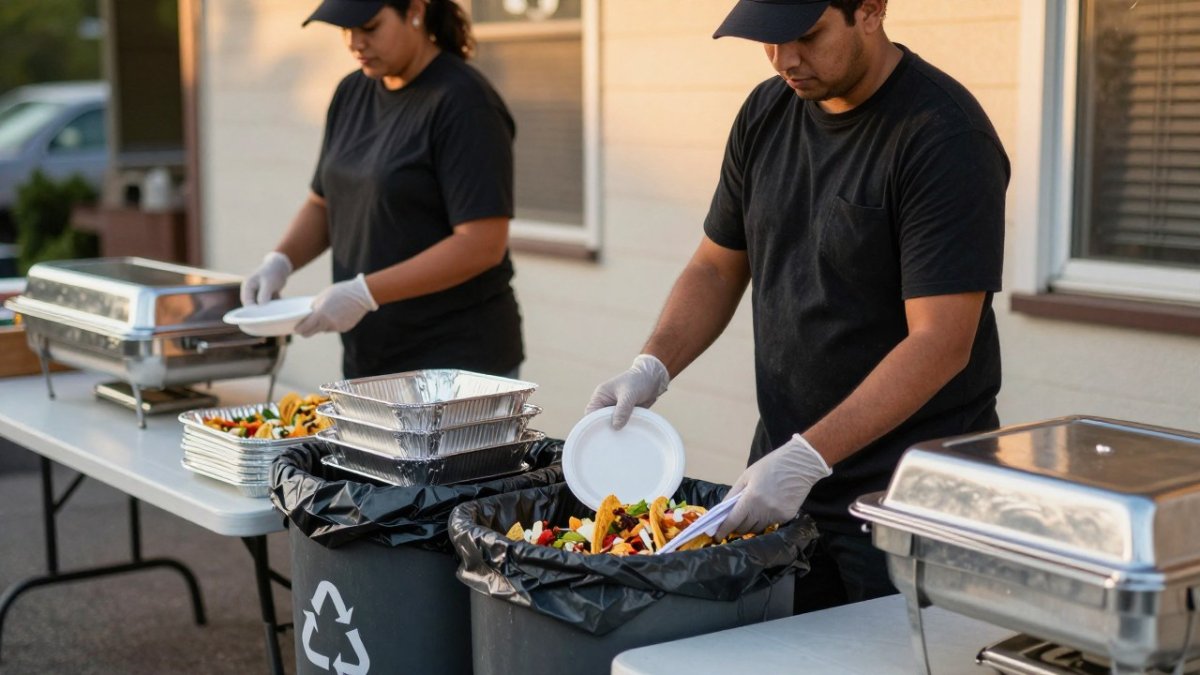
Supplies to Have on Hand Before the Event
Stock these before guests arrive. A mid-event run to the store is the last thing you want.
- Heavy-duty trash bags, at least two sizes, plus color-coded bags for recycling and compost
- Separate bins for trash, recycling, and compost, each clearly labeled
- Nitrile gloves for anyone handling food waste
- Paper towels and a spray cleaner for spills
- Foil pans with lids for leftovers
- Coolers with ice for rapid chilling
Watch out: Grease is one of the biggest venue risks at a taco event. A single spilled tray of drippings can stain concrete or ruin a rented floor. Put a drip tray under every chafing dish, and keep absorbent material within arm's reach of the serving line.
Who Does What: Host, Caterer, and Venue
Most cleanup disputes come from assuming someone else is handling a task. Fill this out before you sign the contract.
- Caterer: cooking equipment, chafing dishes, serving utensils, and their own prep area. Confirm whether they also bag and haul guest trash.
- Host: guest tables, decor, personal items, and any food or drink you supplied yourself.
- Venue: dumpster access, loading dock rules, and whether they require a licensed hauler for grease or bulk waste.
Ask the caterer to write the cleanup scope into the service agreement, including the time they stop working and whether an extended-hours fee applies. Confirm the end time in writing, and ask whether any extended-hours fee applies.
Step-by-Step Teardown Workflow
Follow this order. It keeps food safe and protects the venue.
- Clear guests from the serving area and stop replenishing food.
- Pack leftovers into shallow foil pans within two hours of serving.
- Chill hot food fast in coolers with ice, not on the counter.
- Scrape serving trays into the compost or grease bucket, not the sink.
- Bag trash by type: food waste, recyclables, and landfill, using color-coded bags.
- Wipe tables and serving surfaces with cleaner.
- Sweep the ground for tortilla chips, napkins, and foil.
- Break down boxes and stack them for recycling.
- Stage bags where the venue requires them, inside the dumpster enclosure if specified.
- Do a final walk-through with the venue contact and photograph the space before you leave.
Watch out: Do not pour grease or drippings down a sink or storm drain. It clogs plumbing and violates many municipal codes. Pour cooled grease into a lined bucket with a lid and dispose of it through a licensed hauler or a designated grease recycling drop-off.
Venue Rules That Change the Cleanup Plan
Some venues require caterers to carry a business license and liability insurance before they can haul waste off the property.
Best for: hosts who want a clean venue without hiring staff. Skip if: your caterer already includes teardown and haul-out in the contract.
Here is the teardown order the article recommends following to keep food safe and protect the venue.
| Step | What to do |
|---|---|
| 1 | Clear guests from serving area and stop replenishing food |
| 2 | Pack leftovers into shallow foil pans within two hours |
| 3 | Chill hot food fast in coolers with ice, not counter |
| 4 | Scrape serving trays into compost or grease bucket, not sink |
| 5 | Bag trash by type using color-coded bags |
| 6 | Wipe tables and serving surfaces with cleaner |
| 7 | Sweep ground for tortilla chips, napkins, and foil |
| 8 | Break down boxes and stack them for recycling |
Leftover Taco Meat Food Safety: What to Keep and What to Toss
Leftover taco meat food safety comes down to time and temperature.
Follow USDA food safety guidance on the two-hour rule when you are unsure. It is the standard health inspectors use.
What to keep:
- Meat held at safe temperature and refrigerated within two hours
- Unopened packages of cheese, sour cream, or salsa
- Whole tortillas still in their packaging
What to toss:
- Meat that sat out through a long event
- Anything that touched a guest's plate
- Cut garnishes like cilantro, onion, and lime wedges
- Warm dairy, including crema and shredded cheese
Store kept meat in shallow containers, no more than two inches deep. Deep containers cool too slowly in the middle. Eat leftovers promptly, and reheat to steaming hot.
A common mistake is leaving foil pans of meat on the buffet "just in case." That is exactly how food poisoning happens at otherwise great parties.
Catered Event Food Waste Reduction Before the Party Starts
Catered event food waste reduction starts with portion planning, not with leftovers. Most taco bar waste is decided before the first guest arrives.
A practical approach is to plan per-person quantities and add a small buffer, not a large one.
Three moves cut waste fast:
- Confirm the headcount a couple of days out. RSVP lists shrink and grow.
- Offer two proteins, not five. Fewer options mean less unused food.
- Hold back a portion. Ask the caterer to keep some food unopened for later.
Want help with quantities and hosting flow? Our guide on how to host a taco bar party for a crowd covers portion planning step by step.
Watch out: "Better too much than too little" is the most expensive habit in event catering.
Sorting, Donating, Recycling, and Composting Leftovers
Sorting leftovers correctly is the difference between a clean disposal and a contaminated dumpster that your venue gets fined for.
- Recycling: clean aluminum foil, rigid plastic cups and clamshells, glass bottles, and flattened cardboard. Foil must be free of food residue; rinse or wipe it before it goes in.
- Compost: food scraps, napkins, uncoated paper plates, and plant-based cutlery if your hauler accepts them. Meat, dairy, and greasy items are accepted by some commercial composters and rejected by others.
- Landfill: greasy foil, plastic wrap, mixed-material items, and anything food-soaked that your hauler will not take.
Watch out: A single greasy foil pan dropped in the recycling bin can contaminate an entire load and get your venue's recycling service suspended. Keep a dedicated grease can or lined bucket next to the scrap station and scrape foil pans into it before stacking them.
Food Donation and Local Disposal Rules
Food donation is possible, but the rules are strict and they vary by location and by recipient. Donated food must be handled safely and kept at proper temperatures the whole time (the FDA).
Before you promise leftovers to anyone, call the recipient first. Ask three questions: Do you accept prepared food from a catered event? How must it be packed and labeled?
Check with your local health department about its rules for prepared food donation before you promise anything.
For disposal, bulk pickup and haul-out services exist for large events.
A Practical Sorting Workflow for Teardown
Do not sort at the end. Sort as you clear, in this order:
- Scrape first. Scrape every serving tray and guest plate into the compost or grease bucket before stacking anything.
- Separate liquids. Pour leftover salsas, cremas, and drippings into a lined bucket, not the sink, which clogs on grease.
- Bag by stream. Use different bag colors, clear for recycling, black for landfill, green for compost, so the hauler and your venue staff can tell them apart at a glance.
- Stage at the curb or loading dock. Confirm with the venue where bags go and whether they must be inside a dumpster enclosure.
- Photograph the staging area. A quick photo of labeled, separated bags protects you if the venue later claims the caterer left a mess.
If your caterer handles haul-out, ask which waste streams they separate and where the waste ends up. A caterer who cannot answer that question is probably sending everything to landfill.
Taco Catering Cleanup and Waste Disposal Prices
Taco catering cleanup and waste disposal prices depend on guest count, venue rules, and whether haul-out is included. There is no single rate.
What drives the cost:
- Guest count: more guests mean more trash and longer teardown
- Venue rules: some venues require licensed haul-out
- Distance to dumpster or loading area
- Service style: full on-site cooking creates more equipment and grease
- Add-ons: extra staff, extended hours, and waste removal
Ask every caterer these three questions:
- Is teardown included, or is it an add-on?
- Who removes the trash, and where does it go?
- Is there a fee for grease or bulk waste?
For budgeting help, see our step-by-step guide on how to plan an event catering budget. If you are pricing a bigger party, our breakdown of taco catering for 100 guests gives you a benchmark to compare against.
Booking Taco Catering That Handles the Mess for You
Booking taco catering that handles the mess means choosing full-service over drop-off.
That distinction matters most at larger events.
You can see the full-service option on our full service taco catering guide, or go straight to our catering service to check availability for your date.
The real question is not whether cleanup is hard. It is whether you want to spend your event doing it.
Cleanup is the part of event planning nobody wants to think about, and it is exactly where a good caterer earns their keep.
Frequently Asked Questions
Who is responsible for cleanup after catered food?
It depends on the contract. Full-service and drop-off catering typically divide cleanup differently, so ask which applies to your booking. Ask before booking whether the quote covers equipment removal, trash haul-out, and floor or table cleaning. If the venue charges a separate cleaning fee, confirm who pays it. Get the answer in writing so there is no dispute the night of the event.
How do you dispose of leftover taco meat safely?
Leftover taco meat food safety comes down to time and temperature. Meat that sat out more than two hours at room temperature should be thrown away, not saved. Meat kept hot in a chafing dish or chilled on ice can be cooled quickly in shallow containers and refrigerated within two hours. Reheat leftovers until steaming hot before eating. Never pour large amounts of grease or meat scraps down a drain; bag them and place them in the trash or a compost bin that accepts meat.
What supplies do you need to clean up after a taco bar?
A taco catering cleanup checklist should include heavy-duty trash bags, separate bins for recycling and compost, nitrile gloves, paper towels, a spray cleaner, a scraper for greasy surfaces, and sealable containers for safe leftovers. Add a broom and dustpan for chips and shells, plus a cooler with ice for rapid chilling of meat you plan to keep. Line trash cans before guests arrive so teardown is faster and spills stay contained.
How can you reduce waste at a taco bar?
Catered event food waste reduction starts with accurate guest counts and per-person estimates rather than over-ordering. Choose disposable serving supplies that can be recycled or composted, set out smaller topping portions and refill as needed, and keep messy ingredients like salsa and crema in lidded containers. Arrange labeled bins for trash, recycling, and compost so guests sort correctly. Confirm with your caterer whether leftover food can be donated under local food recovery rules.