 How-to
7 Allergen-Friendly Office Lunch Catering Options That Work
Last Updated: November 15, 2026
Quick Summary
The best allergen-friendly office lunch catering options are build-your-own taco bars, grain bowl stations, and sandwich-free deli platters, each built to cover multiple allergens at once. Survey your team at least two weeks ahead, separate allergies from intolerances and preferences, and confirm your caterer's cross-contact practices in writing before you book.
- Survey your team at least two weeks before the event so your caterer has time to adjust.
- A food allergy is an immune response, while an intolerance causes discomfort and a preference is a choice.
- Keep sauces and toppings in separate containers and assign separate utensils to each tray.
- Assign one staff member to watch the buffet line and reset utensils during service.
- Tacos Papi Grande offers free delivery for groups of five or more and on-location cooking for 50 or more.
Table of Contents
- Why Allergen-Friendly Catering Matters for Office Lunches
- Surveying Your Team: How to Collect Dietary Restrictions Before You Order
- Allergy, Intolerance, or Preference? Know the Difference Before You Order
- Inclusive Office Lunch Menu Ideas That Cover Every Dietary Need
- Cross-Contact Prevention at Catered Events: Questions to Ask Your Caterer
- A Step-by-Step Checklist for Planning an Allergen-Safe Office Lunch
- Booking Your Allergen-Friendly Office Lunch
- Frequently Asked Questions
Why Allergen-Friendly Catering Matters for Office Lunches
A team lunch goes wrong the moment one person can't safely eat what's on the table. For the roughly 33 million Americans with food allergies, a catered office meal is not a small inconvenience; it is a health risk that requires planning, according to Food Allergy Research & Education.
At Tacos Papi Grande, we cater corporate lunches, and we believe the safest events are the ones where the planner asks good questions early. Below, we walk through exactly how to survey your team, read a menu, prevent cross-contact, and book a lunch that every single person can eat.
The stakes are higher than most office managers expect. A single missed ingredient can send an employee to the emergency room. The good news: a clear process removes almost all of the risk.
Surveying Your Team: How to Collect Dietary Restrictions Before You Order
Start by asking, and ask early. Send a short survey at least two weeks before the event so your caterer has time to adjust.
Keep the questions simple and specific:
- Do you have a food allergy? If yes, which foods?
- Do you avoid certain foods by choice, such as pork or gluten?
- Do you carry an epinephrine auto-injector?
- Can we share your needs with the caterer?
Make the form anonymous if your team prefers. People are often shy about "being difficult," so frame it as routine. A good line: "We want everyone to eat well, so tell us what works for you."
Follow up with anyone who flags a serious allergy. Confirm the details by phone or in person. Written answers can hide nuance, and a two-minute chat catches what a form misses.
Allergy, Intolerance, or Preference? Know the Difference Before You Order
These three words get used interchangeably, and that causes real problems. They are not the same, and your caterer needs to know which one applies.
A food allergy is an immune response that can be life-threatening, even in tiny amounts. A food intolerance, like lactose intolerance, causes discomfort but is not an immune reaction. A dietary preference is a choice, such as vegetarian or vegan eating.
Why does the distinction matter? Because a preference can tolerate a little cross-contact, and an allergy cannot. Tell your caterer which is which. The American College of Allergy, Asthma & Immunology draws the same line: allergies involve the immune system and demand strict avoidance.
When you label the request correctly, your caterer can protect the right people.
Inclusive Office Lunch Menu Ideas That Cover Every Dietary Need
Build the menu so the safe choice is also the appealing choice. Designing a few complete menus that each account for multiple allergens at once is a practical approach.
Menu 1: Build-Your-Own Taco Bar (gluten-free, dairy-free, nut-free base)
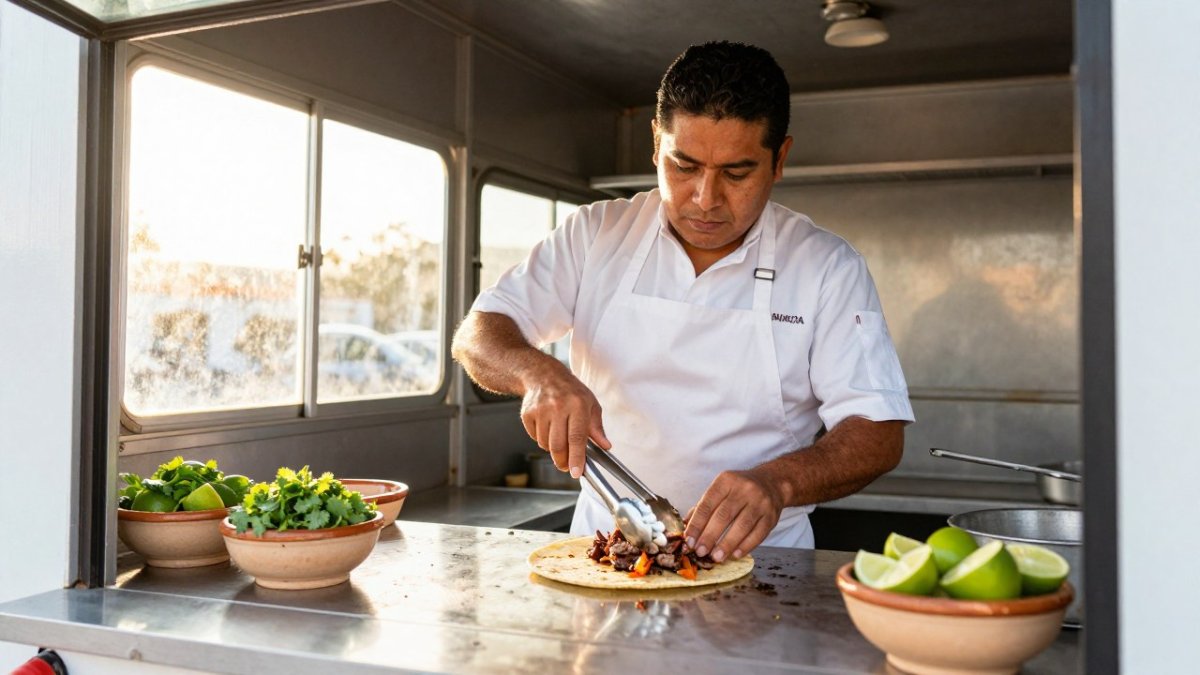
A taco bar works well because guests assemble their own plates, which gives you natural control over what goes on each one. Keep every component in its own container with its own utensil.
- Corn tortillas, ingredients: corn masa, water, lime. Free from gluten, dairy, nuts, soy, egg. Substitution: none needed; confirm the brand is produced on a dedicated gluten-free line if a guest has celiac disease.
- Grilled chicken or carne asada, ingredients: chicken or beef, salt, garlic, chili, lime. Free from gluten, dairy, nuts, soy, egg. Substitution: plain grilled chicken for guests avoiding chili or nightshades.
- Black beans and rice, ingredients: black beans, rice, onion, garlic, oil, salt. Free from gluten, dairy, nuts, soy, egg; vegan. Substitution: plain rice if a guest avoids legumes.
- Fresh salsa and guacamole, ingredients: tomato, onion, chili, lime, cilantro; avocado, lime, salt. Free from gluten, dairy, nuts, soy, egg; vegan. Substitution: pico de gallo only for guests avoiding avocado.
- Shredded cabbage and lime, ingredients: cabbage, lime, salt. Free from all major allergens; vegan.
- **
Menu 2: Grain Bowl Station (gluten-free, dairy-free, vegan option)
- Base: quinoa or brown rice, free from gluten, dairy, nuts, soy, egg.
- Proteins: grilled chicken, roasted chickpeas, or hard-boiled eggs, keep each in a separate tray so guests can choose.
- Roasted vegetables: zucchini, bell pepper, and sweet potato with oil and salt, free from all major allergens.
- Sauces on the side: olive oil and lemon; tahini (contains sesame); salsa verde. Label tahini clearly because sesame is a major allergen.
- Crunch: toasted pumpkin seeds in a sealed cup, free from gluten, dairy, egg; contains seeds.
Menu 3: Sandwich-Free Deli Platter (gluten-free, nut-free)
Sandwiches are a common lunch format but a poor fit for gluten-free guests. Replace them with a deli platter.
- Rolled turkey and roast beef, confirm no gluten-containing fillers or binders; ask the caterer for the ingredient statement.
- Cheese slices on a separate tray, dairy present; keep apart from dairy-free items.
- Lettuce cups and gluten-free crackers, check the cracker label for shared-line warnings.
- Pickles, olives, and mustard in sealed containers.
Quick reference: which menu fits which need
| Menu | Gluten-free | Dairy-free | Nut-free | Vegan option | Best for |
|---|---|---|---|---|---|
| Taco bar | Yes (corn tortillas) | Yes | Yes | Yes (beans and rice) | Mixed groups, self-serve control |
| Grain bowl station | Yes (quinoa or rice) | Yes | Yes (check sauces) | Yes (chickpeas) | Guests who want a plated meal |
| Deli platter | Yes (lettuce cups) | No (cheese tray) | Yes | No | Nut-free offices, low-carb guests |
Keep sauces and toppings in separate containers. Offer individually packaged sides for anyone with a serious allergy. Watch out: a dish labeled "gluten-free" can still carry a shared-facility warning on its packaging; read the label rather than trusting the menu description. For a deeper look at gluten-free choices, see our guide to gluten-free taco catering options.
Cross-Contact Prevention at Catered Events: Questions to Ask Your Caterer
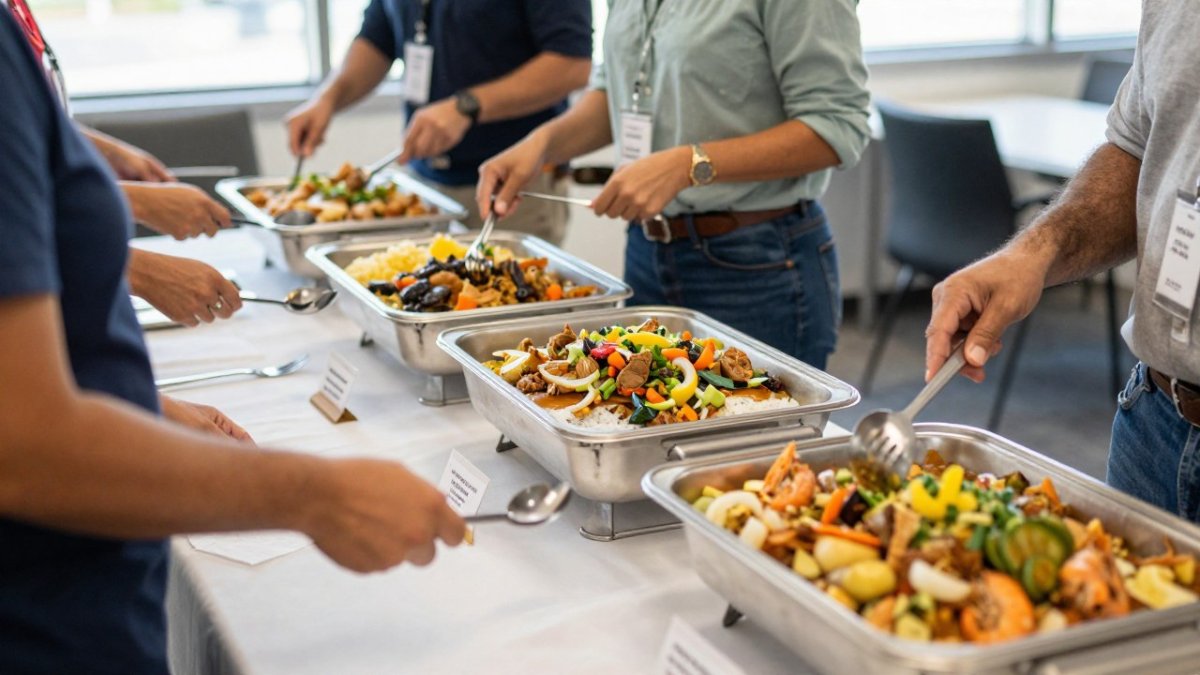
Cross-contact is the quiet risk at any buffet. It happens when a serving spoon, a cutting board, or a pair of tongs carries an allergen from one dish to another. You cannot see it, and that is what makes it dangerous. The fix is to verify your caterer's practices before you book and to protect separation from delivery through service.
A reusable verification checklist
Use this list when you talk to any caterer. Ask for answers in writing so you can share them with guests who ask.
Ingredient sourcing
- Can you provide the ingredient statement or label for each packaged item?
- Do you check labels for shared-facility and "may contain" warnings?
- Which suppliers do you use for gluten-free and nut-free products, and are those products stored separately?
Preparation surfaces and equipment
- Which dishes share prep surfaces, cutting boards, or fryers?
- Do you clean and sanitize surfaces between allergen-containing and allergen-free prep?
- Are separate utensils, tongs, and serving spoons assigned to each tray?
- Do staff change gloves between stations and after handling a known allergen?
Packaging and labeling
- Will every dish be labeled with its ingredients, not just its name?
- Can allergen-friendly portions be individually packaged and sealed?
- How are labels secured so they do not fall off in transit?
Delivery and setup
- Who sets up the buffet, and will that person keep allergen-free trays separated?
- How are trays transported, and are they covered?
- What happens if a label goes missing or a tray is rearranged on site?
Serving logistics: keeping separation from arrival to cleanup
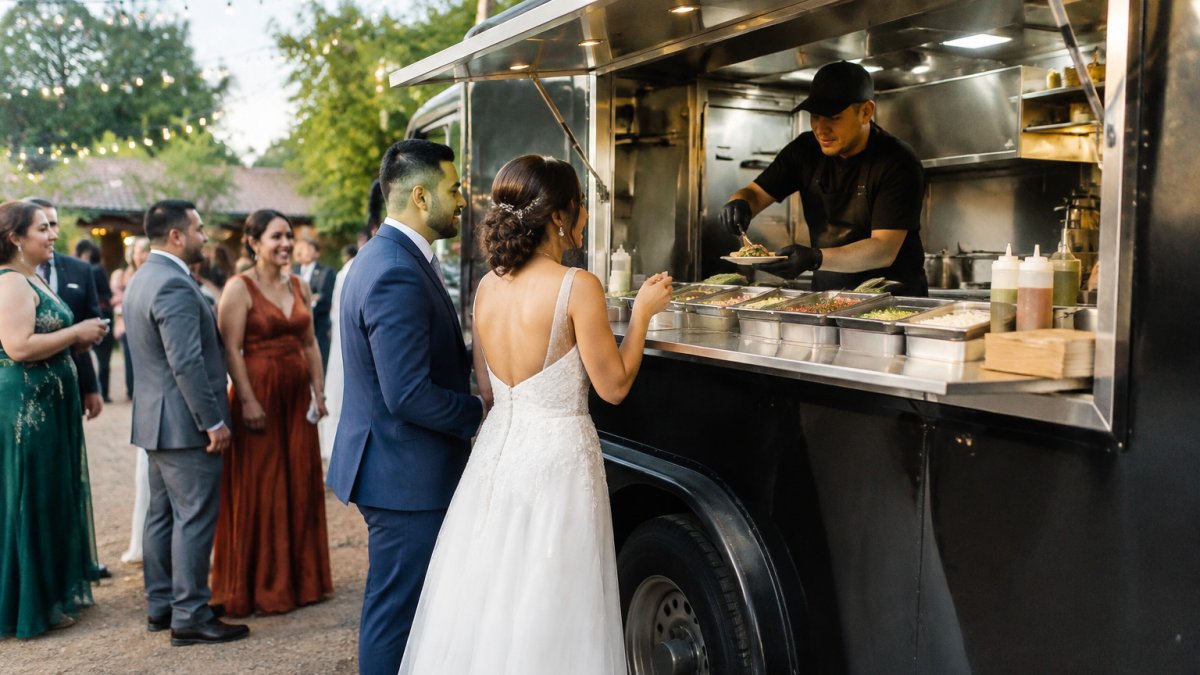
Verification does not end when the food arrives. Plan the serving line so allergen-friendly dishes sit at one end, apart from dishes that contain the allergens you are avoiding. Assign one staff member to answer guest questions and to watch the line; that person can re-label a tray, replace a dropped utensil, or move a dish that has been misplaced.
Watch out: buffet guests routinely move serving spoons between trays or set a tongs handle in the wrong dish; a single staff monitor who resets utensils every few minutes prevents most of this. If a label goes missing, treat that dish as unsafe for the allergic guest until the caterer confirms its contents.
A caterer who answers these questions clearly is one who plans ahead. For more detail on running these conversations, read our guide to managing food allergies for corporate catering events.
A Step-by-Step Checklist for Planning an Allergen-Safe Office Lunch
- Survey your team at least two weeks out
- Separate allergies from intolerances and preferences
- Share the list with your caterer in writing
- Confirm which dishes are free of each allergen
- Ask how dishes will be labeled and served
- Plan a separate serving area for severe allergies
- Confirm headcount and delivery or setup time
- Keep ingredient lists on hand the day of the event
- Assign one staff member to answer guest questions
The labeling step is the one most planners skip, and it is the one that matters most. Small cards in front of each tray tell guests what they can safely eat. If you want a fuller pre-booking review, our corporate catering checklist covers what to verify before you sign.
Booking Your Allergen-Friendly Office Lunch
Ready to make it easy? At Tacos Papi Grande, our scratch-made birria, al pastor, and asada dishes give you a flexible base for many meal plans. We offer free delivery for groups of five or more, and on-location cooking for parties of 50 or more.
Tell us about your team's dietary needs when you book, and we will discuss what we can offer. Visit our catering page to start your order, or read our guide on how to handle office catering allergies for more tips.
Your team deserves a lunch where nobody has to ask "can I eat this?" Get started with Tacos Papi Grande and book a scratch-made taco spread that fits every dietary need, with free delivery for groups of five or more and on-site cooking for larger events.
Frequently Asked Questions
How do you plan an office lunch for employees with food allergies?
Start by surveying your team at least two weeks before the event, asking specifically about food allergies, intolerances, and preferences. Share the results with your caterer in writing and confirm which dishes can be made safely. Ask how the caterer prevents cross-contact, request labeled serving trays, and keep ingredient lists on hand during the meal. Build in a backup option, such as individually packaged meals, for anyone with a severe allergy so they are not limited to side dishes.
What should you ask a caterer about allergen handling?
Ask four things: which allergens are present in each dish, how ingredients are verified with suppliers, what steps prevent cross-contact during prep and service, and whether staff are trained on allergen protocols. Request written allergen disclosure for the full menu rather than verbal assurances. For cross-contact prevention at catered events, confirm that separate utensils, cutting boards, and serving areas are used for allergen-free dishes, and ask who on site can answer ingredient questions during service.
Can a caterer guarantee that a meal is allergen-free?
Most caterers cannot offer a true guarantee, because shared kitchens and supplier changes make zero risk hard to promise. Instead, look for a caterer who is transparent about their process: they verify ingredient lists, separate prep areas for allergen-free dishes, and clearly label everything. If someone on your team has a severe allergy, ask whether individually packaged meals are available and confirm the specific precautions in writing before you book.
How should employees share dietary restrictions when ordering lunch?
Use a short digital form that lists the nine major allergens plus open fields for intolerances and preferences. Ask people to note severity, such as whether trace amounts are a concern. Keep responses confidential and share only what the caterer needs to prepare safely. Re-survey before each recurring lunch, since diets change, and assign one organizer to confirm the final order against the collected responses before the event.